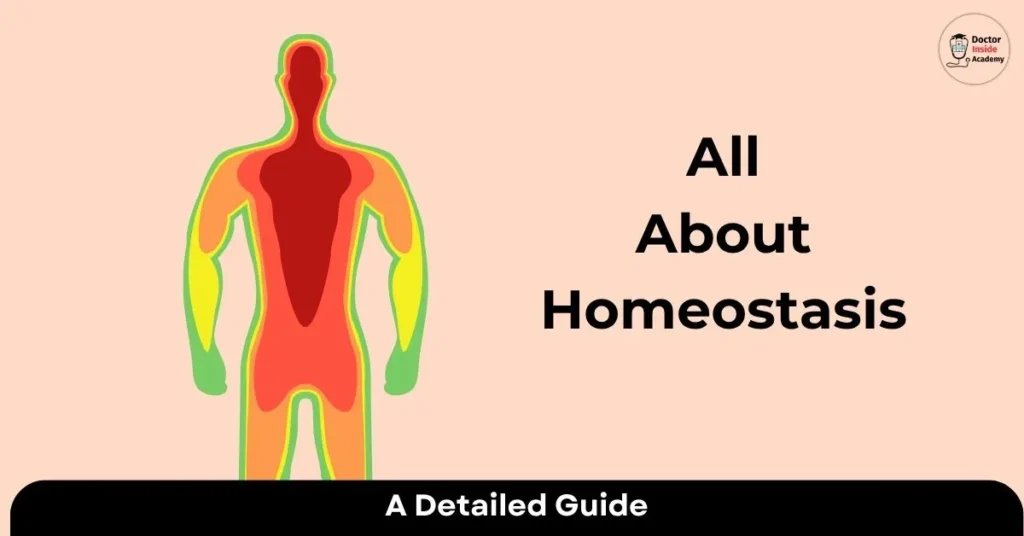
A key component of wellbeing is balance. It is actually essential to our survival. The process of homeostasis enables the body to keep its internal environment steady. Homeostasis is essential for preserving mental health and welfare, even though we frequently consider this in terms of the physical processes involved.
Understanding Homeostasis
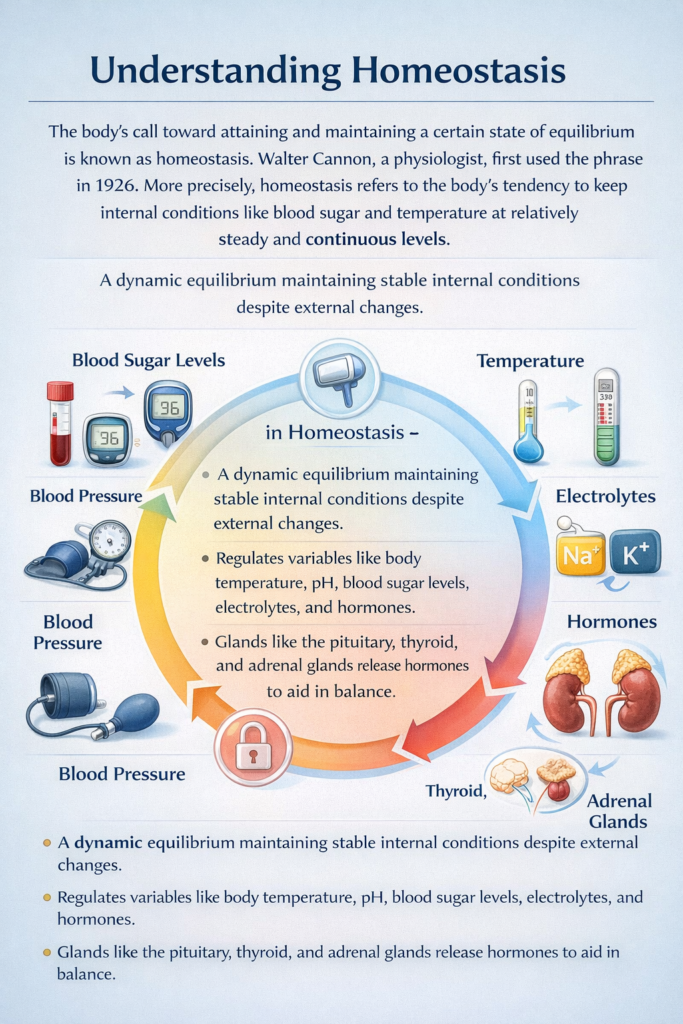
The body’s call toward attaining and maintaining a certain state of equilibrium is known as homeostasis. Walter Cannon, a physiologist, first used the phrase in 1926. More precisely, homeostasis refers to the body’s tendency to keep internal conditions like blood sugar and temperature at relatively steady and continuous levels.
It is the propensity to attain balance in the face of numerous environmental and natural elements.
- Homeostasis produces a dynamic equilibrium in which stable conditions are maintained while constant changes continue to occur.
- The primary function of homeostasis is to regulate the body’s internal variables, such as body temperature, fluid pH, ion concentration, and blood sugar levels.
- The body uses a variety of regulatory systems to fend against changes brought on by internal and external influences.
- The body as a whole or individual organs can both maintain homeostasis.
Some of the systems that self-regulate to maintain normal levels in a state of homeostasis include blood sugar levels, blood pressure, levels of energy acid, proteins with oxygen, temperature, electrolytes, and Hormones, etc.
Important mediators in the control of homeostasis are hormones. Hormones secreted by the endocrine system, which consists of glands including the pituitary, thyroid, and adrenal glands, are transported to target organs through the circulation.
For example, the thyroid gland produces hormones that control metabolism and affect heat generation when the brain releases thyroid-releasing hormone in response to body temperature monitoring. Furthermore, in reaction to stress, the adrenal glands release cortisol, which helps the body react to difficult circumstances by raising blood sugar and inhibiting non-essential processes.
How is Homeostasis Maintained?
Your body has set points for many different states, such as hunger, thirst, sleep, weight, and temperature. Homeostasis will try to adjust the value when it is abnormal (either too much or too little). For instance, you will shiver when you are too cold or sweat when you are too hot in order to control your body temperature.
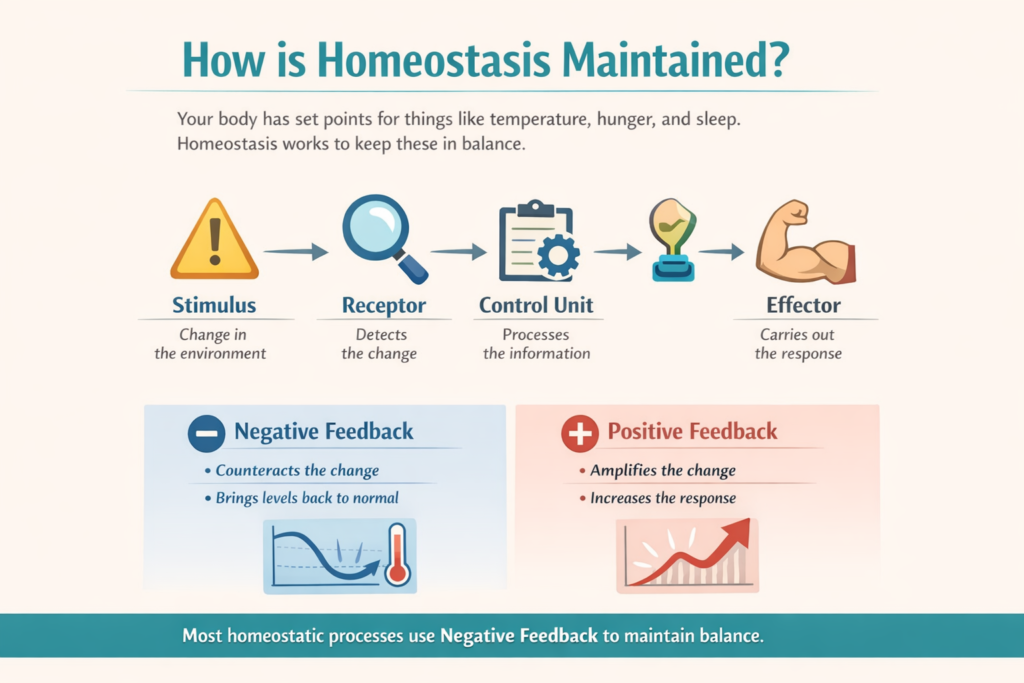
Similarly, your body will react physiologically if something is out of balance until the set point is attained once more. The main elements of homeostasis function as follows:
- Stimulus: Something in the body is thrown out of equilibrium by a change in the surroundings.
- Receptor: In response to the alteration, the receptor notifies the control unit.
- Control Unit: The control unit then transmits the necessary adjustment to restore equilibrium to the body.
- Effector: After receiving this information, the effector makes the necessary adjustment.
A positive feedback loop will increase the stimulus’s effect, whereas a negative feedback loop will seek to lessen it. Negative feedback loops are most prevalent in homeostasis because the body usually tries to lessen the impact of the stimulus in order to restore equilibrium.
Feedback Loop
An identified receptor (sensor), control center (integrator or comparator), effectors, and communication channels make up a feedback loop, which is a system used to regulate the amount of a variable.
We refer to feedback loops using the following terminology:
- Parameters that are tracked, managed, or impacted by the feedback system are called variables.
- Changes in the variable are detected by receptors, also known as sensors.
- Control centers, also known as integrators, instruct the effectors to produce a reaction after comparing the variable to a predetermined point.
- When making decisions, control centers may take into account factors other than the variable’s level, such as age, time of day, and outside circumstances.
- Effectors carry out the required modifications to modify the variable.
Feedback Cycle
The term “feedback cycle” refers to any circumstance in which a variable is controlled, and its level affects how the variable changes (i.e., increases or decreases), even in the absence of clearly defined loop components.
In general, there are two primary categories of feedback loops:
- Positive Feedback Loops are those in which a change in one direction leads to more changes in that same direction. For instance, a rise in a substance’s concentration results in feedback that keeps the concentration rising.
- Negative Feedback Loops, where a shift in one direction results in a shift in the other. For instance, a rise in a substance’s concentration results in feedback, which eventually lowers the substance’s concentration.
Types of Homeostatic Regulation
The body undergoes three primary forms of homeostatic control. You may not be familiar with their names, yet you most likely encounter them on a daily basis.
Thermoregulation
Temperature may be the first thing that comes to mind when you consider equilibrium. It is among the most significant and evident homeostatic mechanisms. Thermoregulation is the process of controlling body temperature.
To live, all living things, from massive animals to microscopic bacteria, need to maintain the proper temperature. The regulation of these systems and the total size of the organism are some of the elements that affect the capacity to maintain a steady body temperature.
- Endotherms: Certain animals, referred to as “warm-blooded” or endotherms, do this through internal physiological mechanisms. Endotherms include humans, birds, and animals.
- Ectotherms: Ectotherms, sometimes known as “cold-blooded” animals, depend on outside sources to control their body temperature. Ectotherms include both amphibians and reptiles.
The size of an organism, more precisely, the surface-to-volume ratio, also affects thermoregulation.
- Larger Organisms: Due to their larger body volumes, larger animals generate more body heat.
- Small Organisms: Conversely, smaller creatures have a higher surface-to-volume ratio but create less body heat. Their internal systems have to work significantly harder to keep a constant body temperature because they lose more body heat than they generate. This also applies to infants, particularly those born before their due date.
Osmoregulation
The goal of osmoregulation is to keep the proper levels of water and electrolytes both within and outside of the body’s cells.4 As with osmosis, the balance of water and salt across membranes is crucial, which explains the term “osmoregulation.” The kidneys are in charge of eliminating any extra fluid, waste, or electrolytes throughout this procedure. Blood pressure is also impacted by osmoregulation.
Applications/Importance of Homeostasis
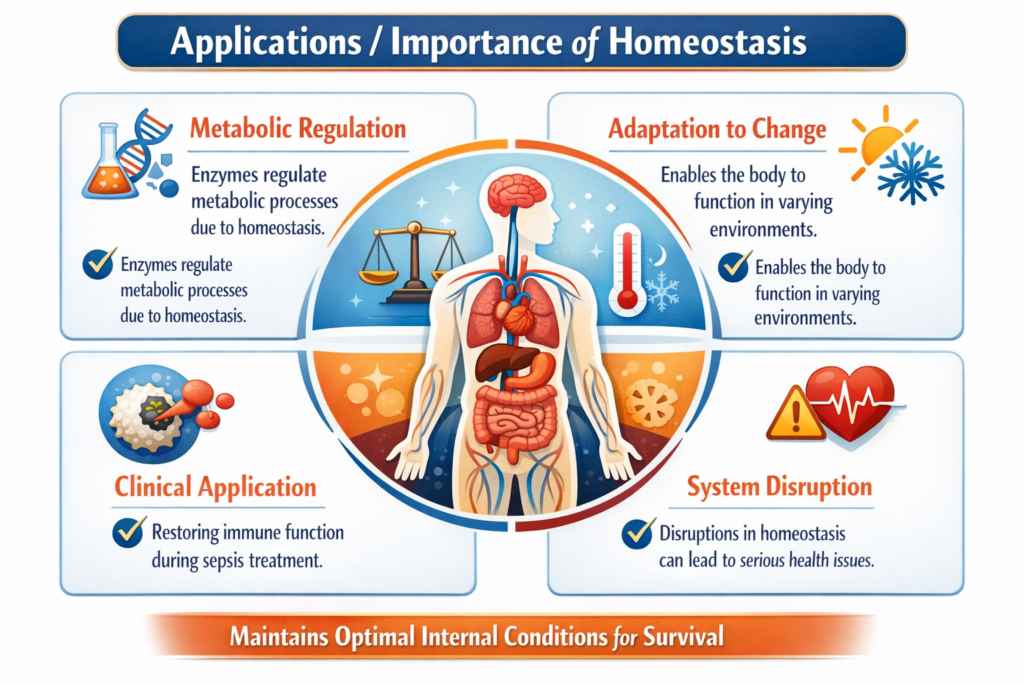
- Homeostasis is an essential mechanism that keeps living things’ internal environments at ideal levels so that regular physiological activities may occur without interruption.
- Enzymes regulate the metabolic processes because of homeostasis.
- The body may continue to operate even in the face of environmental and other changes, thanks to homeostasis.
- Restoring the immune system by phagocytic activity during sepsis brought on by the medicinal drug is one of the clinical uses of homeostasis.
- Any disruption in the homeostatic control of any bodily system impairs the system’s ability to operate normally and may potentially be lethal.
Allostasis vs Homeostasis
Allostasis refers to our body’s capacity to anticipate, adjust to, and deal with future occurrences, whereas homeostasis explains how the body tends to create equilibrium within itself in reaction to stress or changes it perceives in real time. Allostasis is more precisely anticipating wants and allocating resources to satisfy them before they materialize.
There is another distinction between these two answers. While allostasis maintains the equilibrium of these systems, homeostasis controls the systems necessary for life.
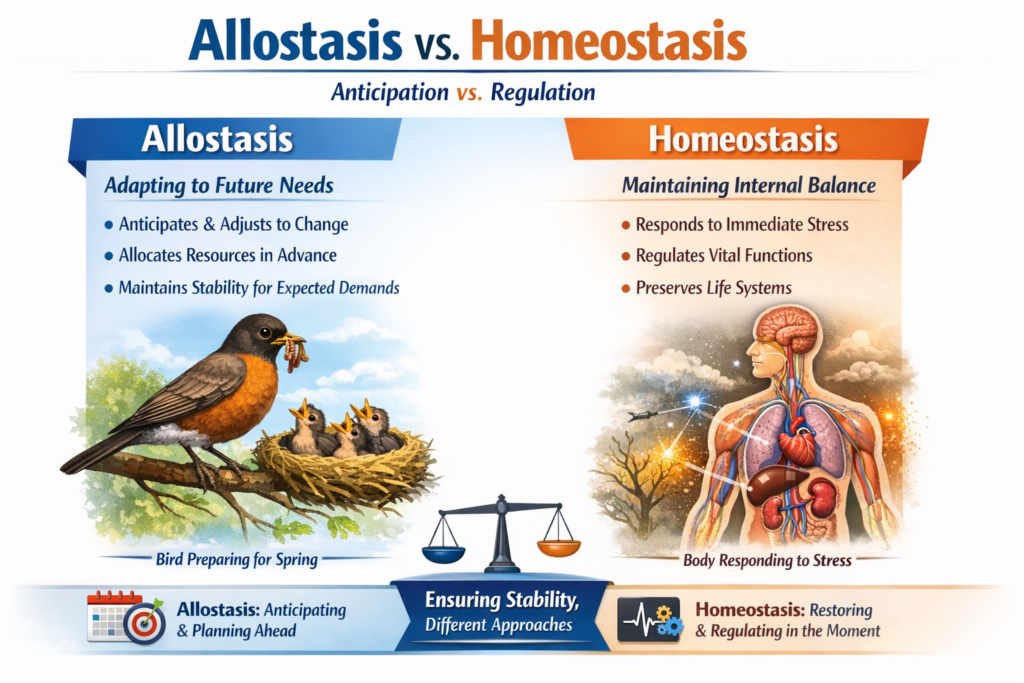
A bird adapting to the seasonal demands it anticipates each year is an example of allostasis. In order to have the stamina to mate and nurture its hatchlings, it will anticipate a lot of food in the spring. By anticipating our needs and making plans to satisfy them in advance, allostasis also helps us reduce the likelihood of unpredictable outcomes.
Technological developments are offering a more profound understanding of homeostatic mechanisms at the molecular and systemic levels. Treating illnesses, creating artificial organs, and improving human health all depend on an understanding of the principles underlying homeostasis. For example, wearable technology may now track physiological indicators, enabling real-time balance maintenance modifications.
The foundation of life is homeostasis, which enables the dynamic equilibrium required for living. We may learn more about health, illness, and the resilience of living systems by examining their processes and disturbances. The complexities of homeostasis are still being discovered by science.