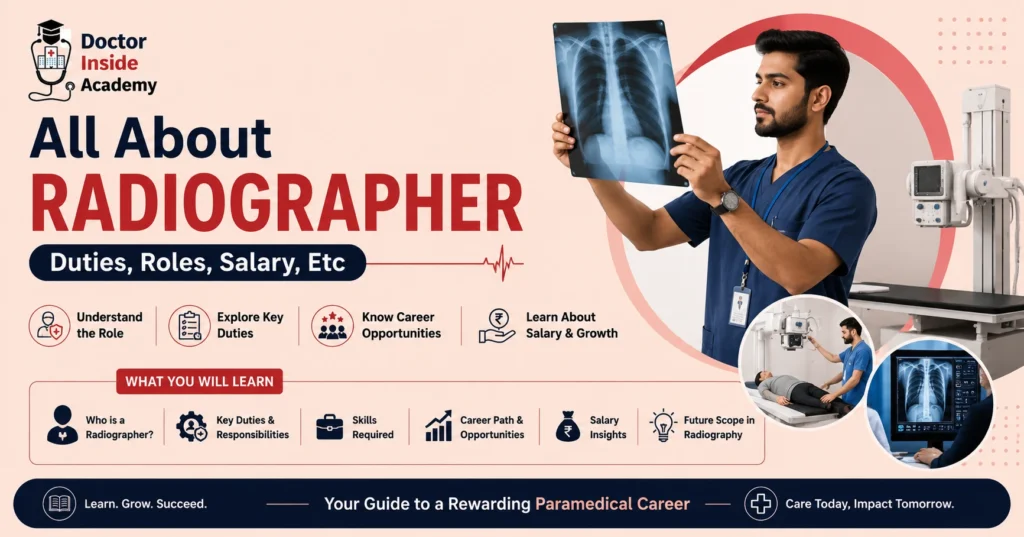
Radiology is a diverse discipline that continues to grow day by day. It speeds up human development in all areas of technology, including health, diagnosis, and treatment. Since it is the foundation of the radioimaging department in the healthcare industry, a person known as a radiographer, the backbone of radiology, arises while addressing medical imaging technology.
In this in-depth guide, we will learn about who radiographers are, the different types of radiographers, their roles, salaries, duties, and much more.
Who is a Radiographer?
A radiographer is a paramedical practitioner who has completed their training in generating diagnostic images of the body’s internal organs or structures using medical imaging equipment. These diagnostic images will identify many medical disorders, diseases, or illnesses.
A radiographer can choose to specialize in X-rays, Computed Tomography (CT), Magnetic Resonance Imaging (MRI), or Ultrasonography (USG). To make sure patients get the best care possible, you work closely with physicians, radiologists, and other medical specialists. Your understanding of anatomy and medical terminology will allow you to position patients to capture the right diagnostic images in an effective way.
Role of a Radiographer
Many of the diagnostic images that radiologists make use of for diagnosing patient conditions are produced by the radiographer. Only the radiation required to generate a high-quality diagnostic image must be monitored, and the patient’s body part must be positioned carefully.
It is important to highlight two important components of the radiographer’s job. While the second focuses on addressing the patient’s needs in the medical field, the first one is about making use of technology professionally. Individuals of all ages, from small children to the elderly, get examined and treated.
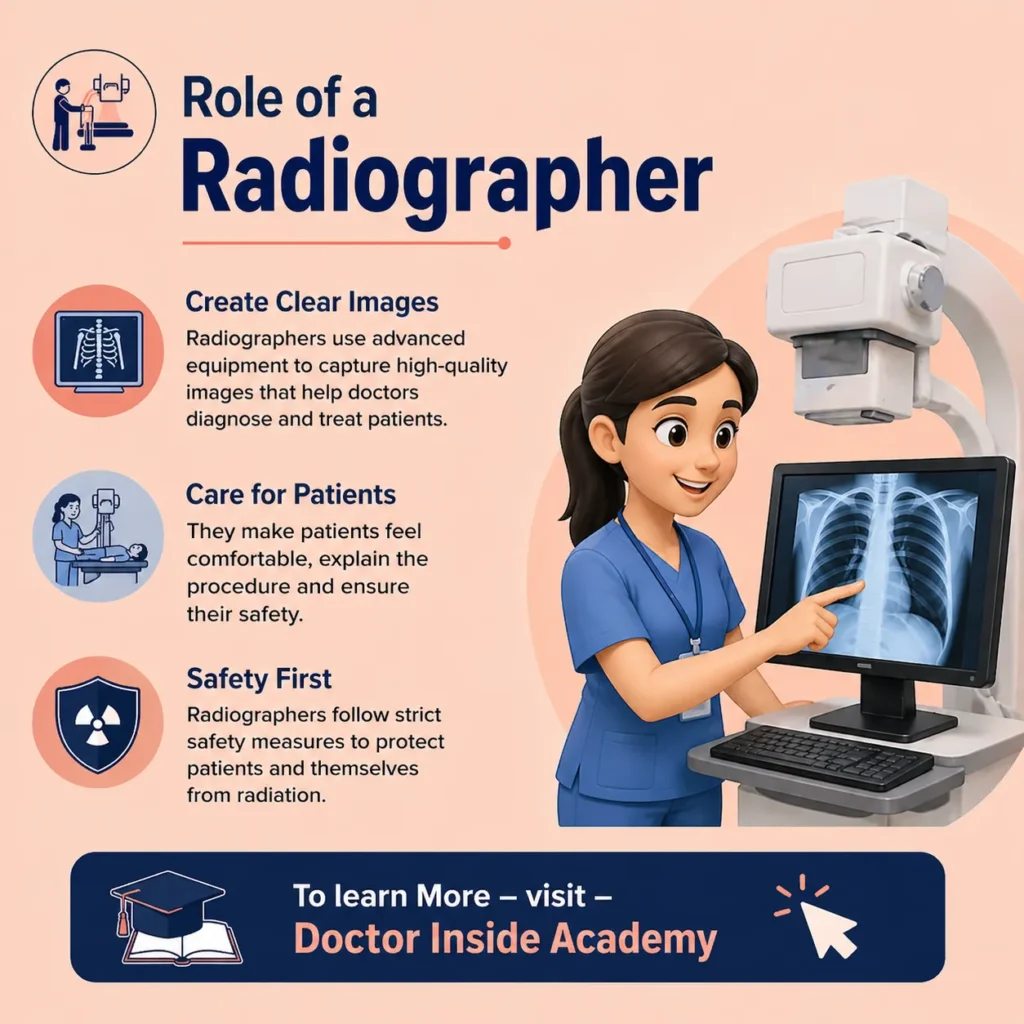
Outside the radiology department, the radiographer works in a variety of settings, including patient rooms, cardiac care, emergency rooms, surgery, and critical care units. Before performing a diagnostic test, radiographers generally capture patient history, including the patient’s personal information and medical history.
The radiologic technician offers a unique skill to help with illness and injury diagnosis.
Radiographers can use the following medical imaging modalities and procedures, are:
- CT Scanners
- Fluoroscopies
- PET Scanners
- Radiotherapy
- Ultrasonography
- X-Rays
- MRI
Different Types of Radiographers
There are specialized categories of radiographers based on their specific work and experience, or the interests in which they want to specialize.
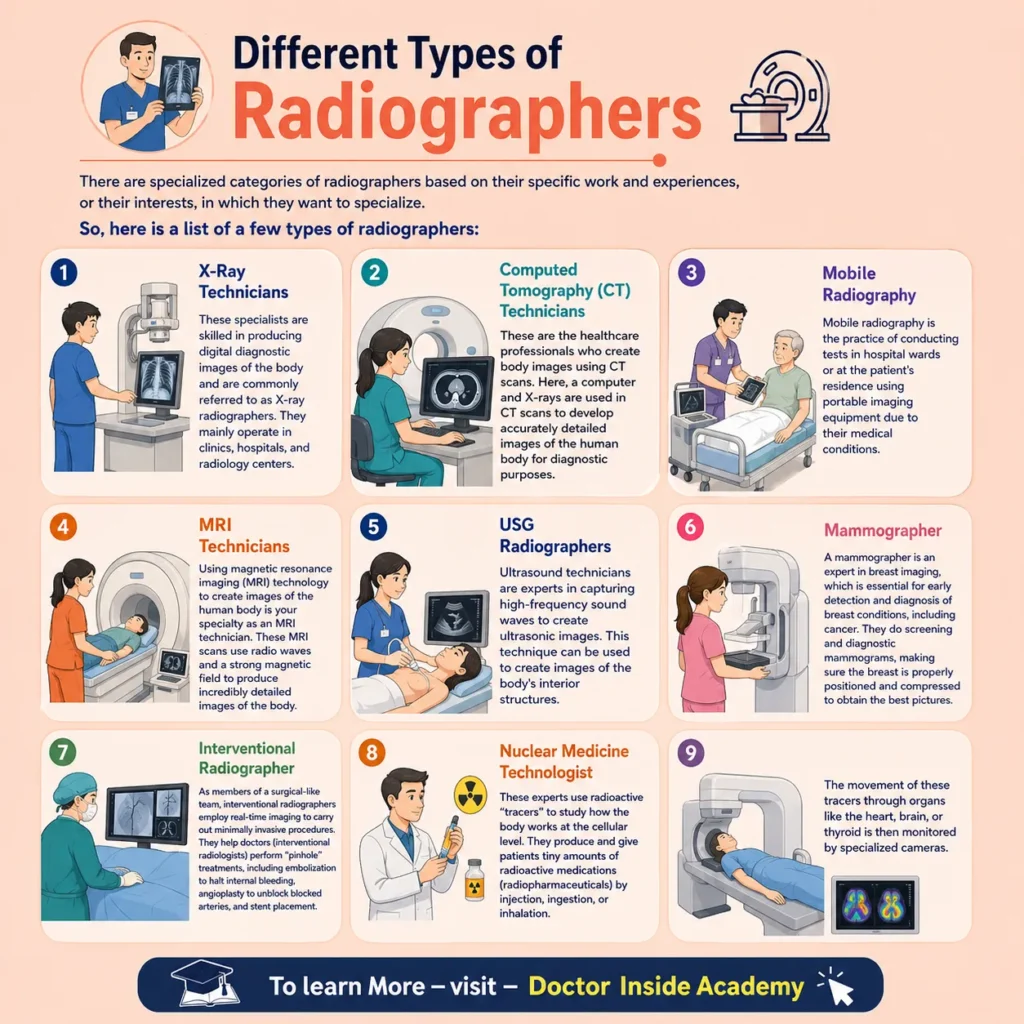
So, here is a list of a few types of radiographers, are the followings:
X-Ray Technicians
These specialists are skilled in producing digital diagnostic images of the body and are commonly referred to as X-ray radiographers. They mainly operate in clinics, hospitals, and radiology centers.
Computed Tomography (CT) Technicians
These are the healthcare professionals who create body images using CT scans. Here, a computer and X-rays are used in CT scans to develop accurately detailed images of the human body for diagnostic purposes.
Mobile Radiography
Mobile radiography is the practice of conducting tests in hospital wards or at the patient’s residence using portable imaging equipment due to their medical conditions.
MRI Technicians
Using magnetic resonance imaging (MRI) technology to create images of the human body is your specialty as an MRI technician. These MRI scans use radio waves and a strong magnetic field to produce incredibly detailed images of the body.
USG Radiographers
Ultrasound technicians are experts in capturing high-frequency sound waves to create ultrasonic images. This technique can be used to create images of the body’s interior structures.
Mammographer
A mammographer is an expert in breast imaging, which is essential for early detection and diagnosis of breast conditions, including cancer. They do screening and diagnostic mammograms, making sure the breast is properly positioned and compressed to obtain the best pictures. Additionally, they support radiologists during more intrusive treatments such as stereotactic breast biopsies or needle localizations.
Interventional Radiographer
As members of a surgical-like team, interventional radiographers employ real-time imaging to carry out minimally invasive procedures. They help doctors (interventional radiologists) perform “pinhole” treatments, including embolization to halt internal bleeding, angioplasty to unblock blocked arteries, and stent placement. During live imaging, they are responsible for monitoring radiation dosages, positioning the patient, and setting up sterile equipment.
Nuclear Medicine Technologist
These experts use radioactive “tracers” to study how the body works at the cellular level. They produce and give patients tiny amounts of radioactive medications (radiopharmaceuticals) by injection, ingestion, or inhalation. The movement of these tracers through organs like the heart, brain, or thyroid is then monitored by specialized cameras.
How to Become a Radiographer?
In India, being a radiographer requires following a set educational path that begins with a science background in upper secondary school and progresses to specialized clinical training.
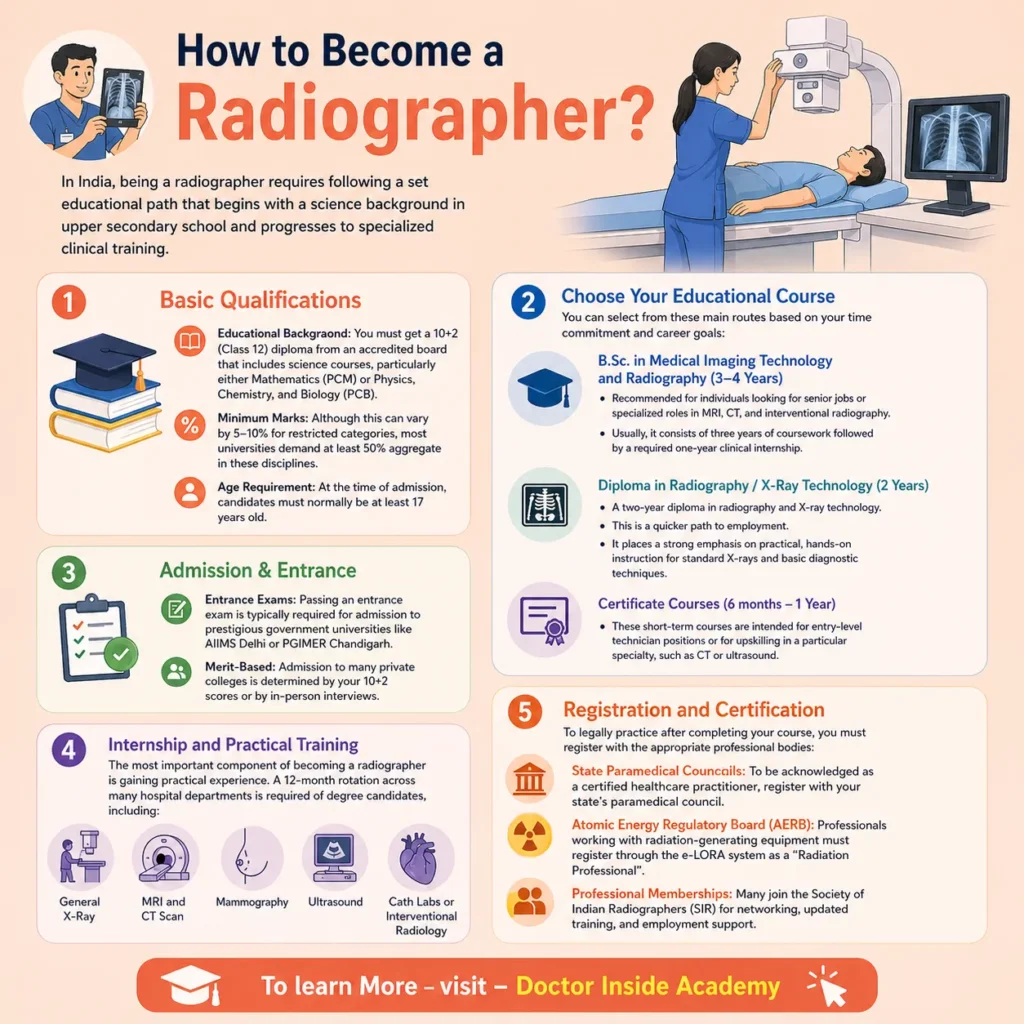
Here is a detailed procedure to become a radiographer, are:
1. Basic Qualifications
- Educational Background: You must get a 10+2 (Class 12) diploma from an accredited board that includes science courses, particularly either mathematics (PCM) or physics, chemistry, and biology (PCB).
- Minimum Marks: Although this can vary by 5-10% for reserved categories, most universities demand at least 50% aggregate in these disciplines.
- Age Requirement: At the time of admission, candidates must normally be at least 17 years old.
2. Choose Your Educational Course
You can select from these main routes based on your time commitment and professional goals:
- B.Sc. in Medical Imaging Technology and Radiography (3-4 Years)
- For individuals looking for senior jobs or specialized employment in MRI, CT, and interventional radiography, this degree is recommended.
- Usually, it consists of three years of coursework followed by a required one-year clinical internship.
- Diploma in Radiography / X-Ray Technology (2 Years)
- A two-year diploma in radiography and X-ray technology
- This is a quicker path to employment.
- It places a strong emphasis on practical, hands-on instruction for standard X-rays and fundamental diagnostic techniques.
- Certificate Courses (6 months – 1 Year)
- These short-term courses are intended for entry-level technician positions or for upskilling in a particular specialty, such as CT or ultrasound.
3. Admission & Entrance
- Entrance Exams: Passing an entrance exam is typically required for admission to prestigious government universities like AIIMS Delhi or PGIMER Chandigarh.
- Merit-Based: Admission to many private colleges is determined by your 10+2 scores or by in-person interviews.
Internship and Practical Training
The most important component of becoming a radiographer is gaining practical experience. A 12-month rotation across many hospital departments is required of degree candidates, including:
- General X-Ray
- MRI and CT Scan
- Mammography
- Ultrasound
- Cath Labs or Interventional Radiology
5. Registration and Certification
To legally practice after completing your course, you must register with the appropriate professional bodies:
- State Paramedical Councils: To be acknowledged as a certified healthcare practitioner, register with your state’s paramedical council.
- The Atomic Energy Regulatory Board (AERB) requires professionals who use radiation-generating equipment to register as “Radiation Professionals” via the e-LORA system.
- Atomic Energy Regulatory Board (AERB): Professionals working with radiation-generating equipment must register through the e-LORA system as a “Radiation Professional”.
- Professional Memberships: Many join the Society of Indian Radiographers (SIR) for networking, updated training, and employment support
Score Your Degree & Internship Letter
After receiving an associate’s or bachelor’s degree in radiography, people should begin working toward certification. They also need to finish their degree or diploma at the university where they were enrolled. Since you are no longer a freshman, you can also use your internship letter as a reference for your current position.
Try to obtain letters of recommendation also, if your training center agrees to these conditions. (It depends)
Apply for Jobs
After receiving all necessary certifications and letters, a radiographer can find employment in a wide range of settings, including hospitals, imaging centers, outpatient clinics, and mobile X-ray companies. The details of what a radiographer does daily depend on the specific job description for that profile.
Skills and Knowledge of Radiographers
You will require:
- Understanding of medicine and medical practices
- Sensitivity and awareness
- Understanding of biological processes
- Capacity to think logically
- Active listening abilities
- Focus
- Pay attention to detail
- Computing skills
- Knowledge of X-ray software
- Understanding of the procedures of radiography
Job Description for Radiographer
As the main users of cutting-edge diagnostic equipment, radiographers are vital healthcare professionals. They serve as a link between the last visible data required to preserve a patient’s life and a doctor’s request for internal information.
Here is the job description for radiographers, are:
Patient Preparation
Patients must be prepared for imaging procedures as part of your job, which includes positioning them, describing the procedure, and making sure they are safe.
Operating Imaging Equipment
Using the right equipment to provide excellent images of the body’s interior parts is the primary responsibility of a radiographer.
Stay Updated on Imaging Equipment
Taking care of the devices you use is another part of your job. You take care of your equipment to keep it in good operating order.
Assessing Image Quality
After creating images of a patient, you evaluate the image quality and make any necessary corrections.
Collaboration with Doctors
Your ultimate goal is to provide physicians and other medical professionals with more details so they can deliver the best possible level of treatment. You discuss imaging findings and patient care frequently with doctors and other medical experts to help with this.
Day-to-Day Tasks of a Radiographer
A radiographer’s workday involves a hectic blend of patient care and technical accuracy. A typical day follows a regular sequence of preparation, imaging, and teamwork, even if shifts vary, particularly for diagnostic radiographers who frequently work 24/7 rotational rosters.
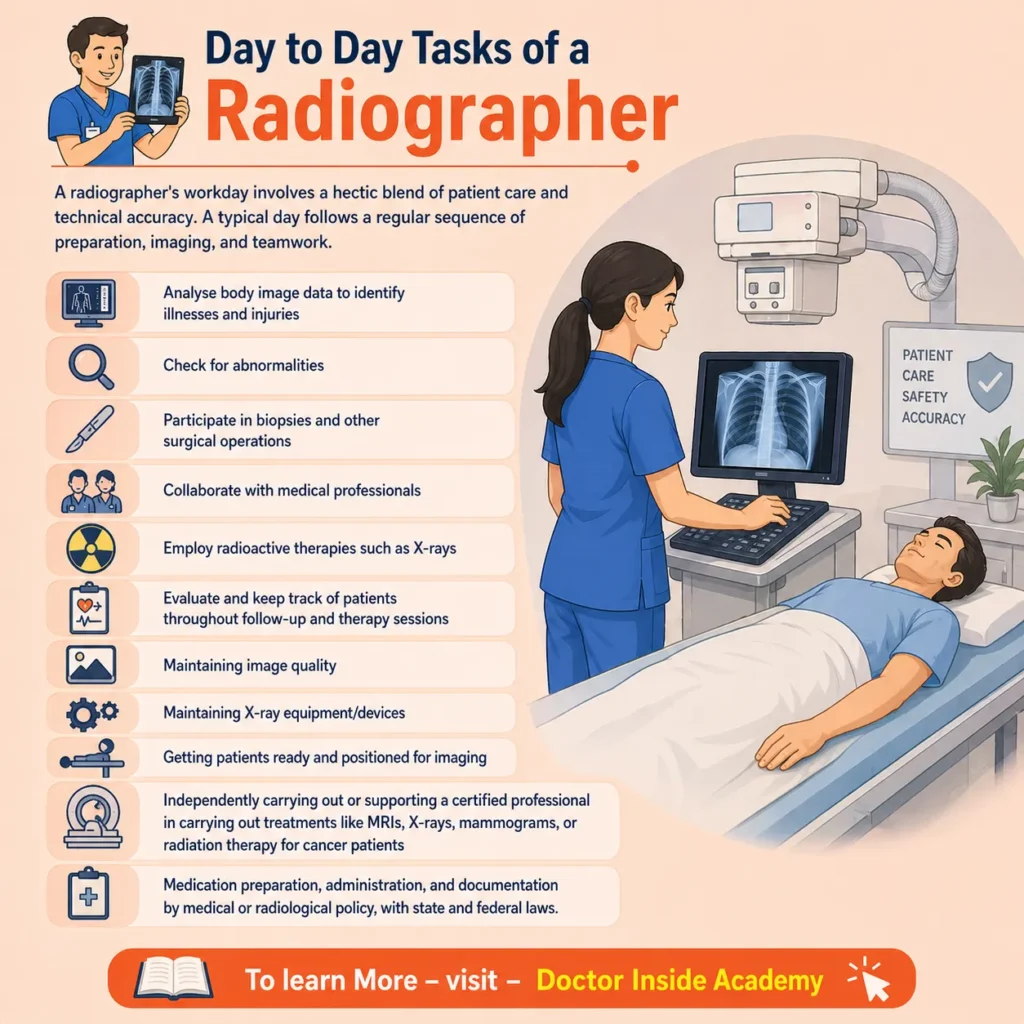
You could do the following as a radiographer:
- Analyse body image data to identify illnesses and injuries
- Check for abnormalities
- Participate in biopsies and other surgical operations
- Collaborate with medical professionals
- Employ radioactive therapies such as X-rays
- Evaluate and keep track of patients throughout follow-up and therapy sessions
- Maintaining image quality
- Maintaining X-ray equipment/devices
- Getting patients ready and positioned for imaging
- Independently carrying out or supporting a certified professional in carrying out treatments like MRIs, X-rays, mammograms, or radiation therapy for cancer patients.
- Medication preparation, administration, and documentation by medical or radiological policy, in accordance with state and federal laws.
Radiographers and radiologists: what’s the difference?
Radiographers and radiologists are both different entities, but they work together to make the process faster and make the diagnosis effective with the proper care and medication for the same.
Here is a brief difference between a radiographer and a radiologist, are the following:
| Aspect | Radiologist | Radiographer (Radiologic Technologist) |
| Education | Medical degree (MD or DO) with specialized radiology training | Bachelor’s or associate’s degree in radiologic technology or radiography |
| Role & Responsibilities | Interprets medical images and diagnoses medical conditions | Performs imaging procedures, operates imaging equipment |
| Certification/License | Certified as a medical doctor, often with radiology board certification | Certified or licensed as a radiologic technologist |
| Patient Interaction | Minimal direct contact; focuses on diagnosis and consultation | Direct contact explains procedures and ensures patient safety |
| Work Environment | Hospitals, clinics, private practices, academic centers | Hospitals, imaging centres, clinics, diagnostic labs |
| Scope of Practice | Diagnosing, analyzing images, and recommending further tests | Performing imaging procedures accurately and safely |
| Work Focus | Medical diagnosis and interpretation of images | Technical operation of imaging equipment and patient positioning |
,
Reasons to See a Radiographer
Usually, a doctor refers patients to a radiographer in order to assist in diagnosing a medical condition that cannot be determined just by a physical examination. The following are the main justifications for such a visit:
You need to see a radiographer for medical imaging if you:
- Have a Broken Bone
- Have a Blocked Artery or Other Vessel
- Have a Foreign Object in Your Body
- May Have a Tumor or Cancer
- Tearing of a Muscle
- Diagnosing Injuries and Pain
- Bone Fractures and Dislocations
- Unexplained Pain
- Head or Brain Injury
- Screening and Early Detection
- Bone Density Scans
- Monitoring Conditions and Treatments
- Treatment Progress
- Chronic Diseases
- Guiding Medical Procedures
- Interventional Guidance
You’ll most likely see a radiologist or a radiologic technologist after a recommendation from another doctor, which may be your primary care doctor or a specialist like an orthopedist.
Salary of a Radiographer
A radiographer typically makes around ₹310,432 a year, according to Payscale. This average takes into account several perks, such as plans for profit sharing and rewards. The salary range for this occupation is much wider. Fresh Radiographers at the beginning of their careers, for instance, can earn up to ₹276,000 annually, while experienced radiographers can earn up to ₹600,000.
Experienced radiographers generally earn more money than those who are just starting their careers in the radiology field. This is because experienced radiographers have extensive knowledge and expertise over time and are capable of working independently.
Radiographers who specialize in a specific imaging modality, like CT or MRI, could be paid more than those who don’t.
You may also be compensated accordingly depending on where you work. Compared to radiographers working in rural or suburban settings, those who work in major cities or metropolitan areas often make more money.