Imagine a brick wall while you close your eyes. What is that wall’s basic building block? Of course, it’s just one brick. Your body is made up of fundamental building blocks, which are cells, just like a brick wall. There are numerous cells in your body, each with a distinct function.
The human body is composed of a variety of cell types, much as a house is built from different construction materials. Bone cells, for instance, support and shield the body. Immune system cells combat invasive germs. Additionally, red blood cells transport oxygen throughout the body. Every type of cell is essential to the body’s growth, development, and daily upkeep.
The most basic structural and functional unit of all living things is the cell. A cell is a structure made up of organelles that carry out the vital functions required for survival. However, each cell is distinctive. Plant cells and animal cells differ significantly. The lack of cell walls in animal cells is one of their primary differences.
Furthermore, various cells range in size; the largest cell in the human body is the egg, also known as the female ovum. It has a diameter of around one millimeter. The human cerebellum contains granule cells, which are the smallest cells at 4.5 micrometers.
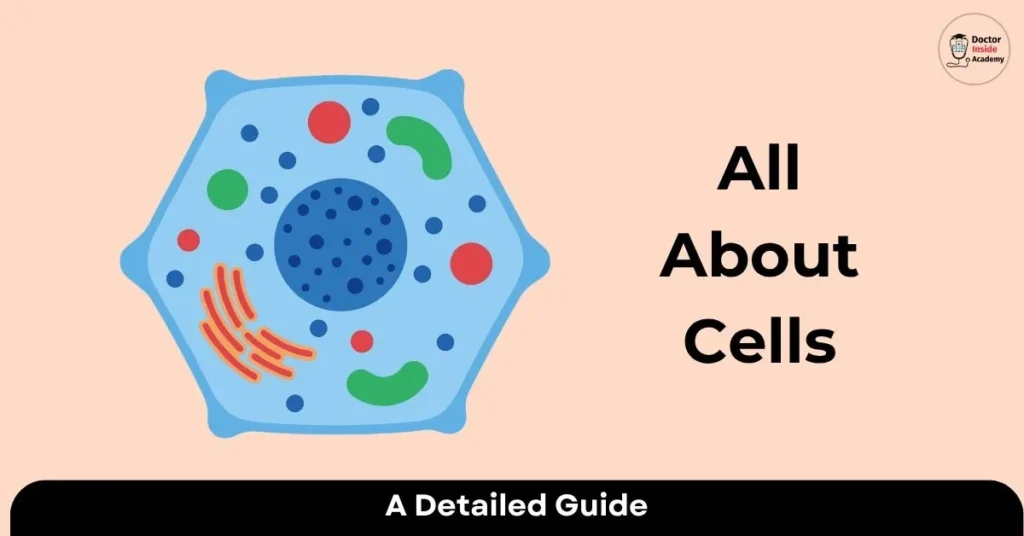
Basic Structure of a Cell
“Biology might seem like a maze of complex diagrams and lengthy phrases, yet it always boils down to one basic concept: the cell. All living things begin here, whether they are tiny bacteria or massive redwood trees.
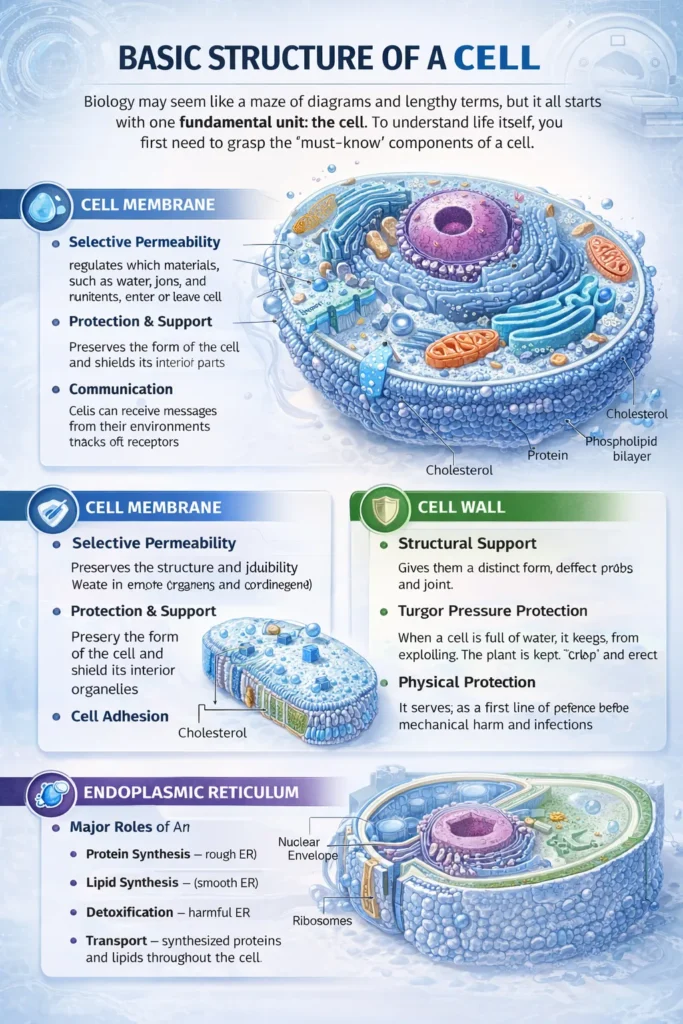
The first step to comprehending life itself is to grasp the fundamental structure of a cell. Let’s examine the “must-know” components that enable each cell to function as a powerhouse.
Cell Membrane
All living cells are surrounded by the cell membrane, also known as the plasma membrane, which is a lipid bilayer that is selectively permeable and divides the inside of the cell from the outside world. It is mostly made up of proteins, cholesterol, and phospholipids. It controls waste elimination and nutrient delivery while preserving homeostasis and structural integrity.
Major Roles of the Cell Membrane
- Selective Permeability: Regulates which materials, such as water, ions, and nutrients, enter or leave the cell.
- Protection & Support: Preserves the form of the cell and shields its interior parts.
- Communication: Cells can receive messages from their surroundings thanks to receptors on the membrane.
- Cell Adhesion: Facilitates the binding of cells to create tissues.
Cell Wall
The cell membrane is surrounded by a rigid functional layer called the cell wall. In contrast to the flexible membrane, it functions more like a robust “external skeleton.” Plants, fungi, bacteria, and algae all have it, but mammalian cells never do.
Major Functions of the Cell Wall
- Plants may grow tall without a skeleton thanks to structural support, which gives them a distinct form and mechanical strength.
- Turgor Pressure Protection: When a cell is full of water, it keeps it from exploding. The plant is kept “crisp” and erect by the wall’s resistance to internal pressure.
- Physical Protection: It serves as a first line of protection against mechanical harm and infections (viruses, bacteria).
- Growth Control: It directs growth in particular directions by limiting the amount of cell expansion.
Endoplasmic Reticulum
In eukaryotic cells, the endoplasmic reticulum (ER) is a vast, continuous membrane structure that serves as a primary “factory” and “highway” for the synthesis and movement of essential chemicals. It is physically attached to the outer nuclear membrane and travels through the cytoplasm in a network of tubules and flattened sacs.
Major Roles of Endoplasmic Reticulum
- Protein Processing: The ER lumen offers a specific setting for proteins to fold into their proper three-dimensional structures after synthesis. BiP and other chaperone proteins aid in this process and stop misfolded proteins from escaping.
- Calcium Storage: The ER serves as the main calcium ion store. These ions are released by the sarcoplasmic reticulum, a specific type found in muscle cells, to cause contraction.
- Intracellular Transport: It functions as a circulatory system, encasing fresh proteins and lipids in transport vesicles before sending them to the Golgi apparatus for further processing.
- Detoxification: Toxic, fat-soluble chemicals are changed by SER enzymes (such as the cytochrome P450 family) into water-soluble, readily eliminated compounds.
Golgi Apparatus
The “post office” or shipping hub of the cell is the Golgi apparatus, often referred to as the Golgi body or complex. Proteins and lipids obtained from the endoplasmic reticulum (ER) are modified, sorted, and packaged by this membrane-bound organelle before being transported to their intended locations.
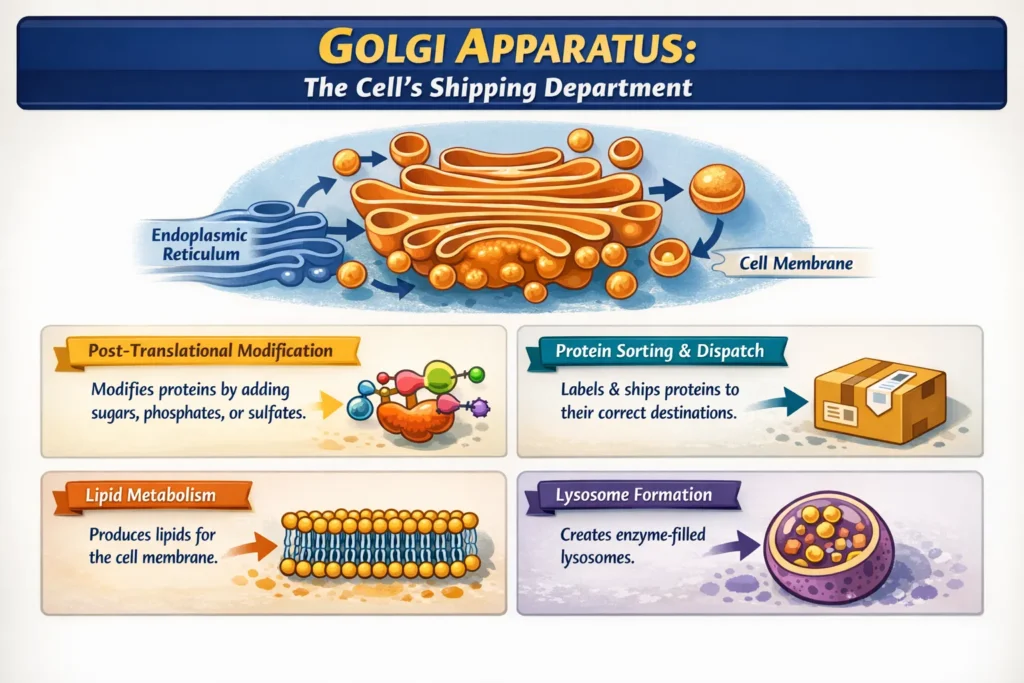
Major Roles of the Golgi Apparatus
- Post-Translational Modification: It functions as an assembly line, modifying proteins to make them functional by adding or deleting sugar molecules (glycosylation), sulfate groups (sulfation), or phosphate groups (phosphorylation).
- Protein Sorting & Dispatch: The Golgi attaches “address labels” to molecules (such as mannose-6-phosphate for lysosome-bound enzymes) to make sure they are released outside of the cell or arrive in the right area.
- Lipid Metabolism: It produces some lipids that are vital parts of the cell membrane, such as glycolipids and sphingomyelin.
- Lysosome Formation: It is in charge of encasing digestive enzymes in specialized vesicles that develop into lysosomes.
Lysosome
The cell’s “recycling centers” or “garbage disposals” are called lysosomes. They are spherical sacs that contain potent digestive enzymes that break down waste products and cell debris.
Major Roles of the Lysosome
- Intracellular Digestion: They decompose nutrients or food particles that the cell has absorbed.
- Autophagy (also known as “self-eating”) is the process by which lysosomes break down damaged or outdated organelles, such as worn-out mitochondria, and recycle their components to create new ones.
- Defense (Phagocytosis): To eliminate trapped bacteria or viruses, lysosomes in white blood cells merge with them.
- Autolysis (“Suicide Bags”): When a cell ages or is severely injured, lysosomes may rupture, releasing enzymes that break down the entire cell, a process known as apoptosis.
Mitochondria
These double-membrane organelles, which are frequently referred to as the “Powerhouse of the Cell,” are where nutrients and oxygen are transformed into energy.
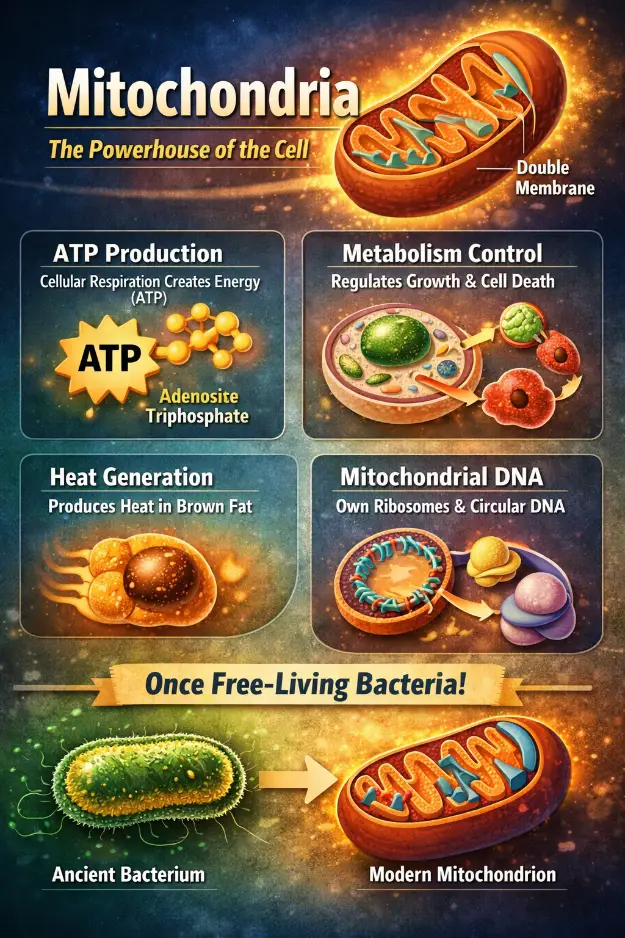
Major Roles of Mitochondria
- Adenosine Triphosphate (ATP), the primary energy unit of the cell, is produced by cellular respiration.
- Metabolism Regulation: They aid in regulating cell growth, apoptosis, and the cell cycle.
- Heat Production: To keep the body temperature stable, some tissues, such as brown fat, produce heat.
- Their distinctive characteristic is that they have their own ribosomes and circular DNA, indicating that they were formerly separate bacteria.
Plastids
These double-membrane organelles, which are exclusively present in plants and algae, are utilized to produce and store food.
Major Roles of Plastids
- The most well-known plastids are called chloroplasts (green); they carry out photosynthesis to produce glucose and contain chlorophyll.
- The pigments (carotenoids) that give fruits and flowers their vivid yellow, orange, and red hues to entice pollinators are stored in chromoplasts.
- Colorless leucoplasts are storage experts. They store proteins (Proteinoplasts), oils (Elaioplasts), or starch (Amyloplasts).
Centrosome
The “Microtubule Organizing Centre” (MTOC) is often located in animal cells close to the nucleus. It has two centrioles, which are barrel-shaped structures.
Major Roles of Centrosomes
- Cell Division: To create the spindle fibers that force chromosomes apart, the centrosome doubles and travels to opposing poles during mitosis.
- Structural Framework: It aids in cytoskeleton organization, preserving the internal form of the cell.
- Cilia and Flagella: Centrioles act as the “basal bodies” (foundations) for the development of movement-related hair-like structures.
Nucleus
The cell’s “Brain” or “Control Center.” A double-layered nuclear envelope with pores surrounds it.
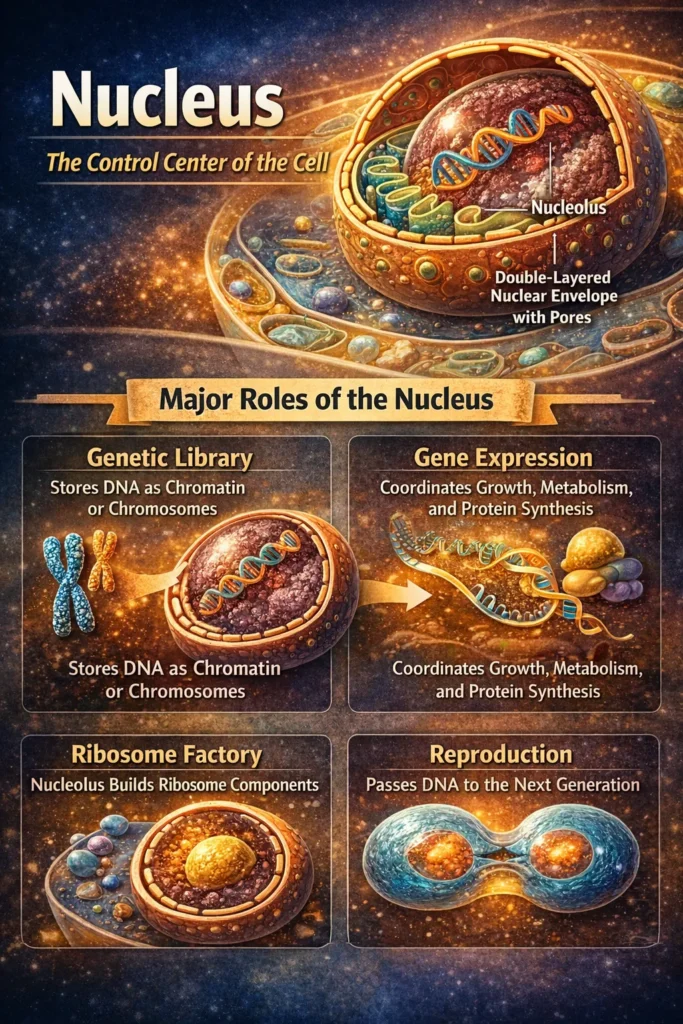
Major Roles of the Nucleus
- The cell’s DNA, which takes the form of chromatin or chromosomes and includes all of life’s blueprints, is stored in the genetic library.
- Growth, intermediate metabolism, and protein synthesis are all coordinated by gene expression, which regulates which genes are “turned on.”
- Ribosome Factory: The components of ribosomes are made in the nucleolus, a dense area inside the nucleus.
- Reproduction: It transmits the genetic information that is handed down from one generation to the next.
Classification of Cells
A cell is the basic structural and functional unit of all living things; it is sometimes referred to as the “building block of life.” Every cell functions as a self-contained factory capable of carrying out vital life functions, including metabolism, energy conversion, and reproduction, regardless of whether it is a basic, single-celled bacterium or a sophisticated, multicellular human.
These tiny units, which are protected by a cell membrane, contain genetic material (DNA), which acts as a blueprint for development and function. Cells organize into specialized groupings to build the tissues and organs necessary for complex life, ensuring that an organism’s biological machinery operates harmoniously.
Classification based on size
Cells vary greatly in size, ranging from tiny bacteria to visible bird eggs. The surface area-to-volume ratio often sets a size limit; a cell must be tiny enough for waste products and nutrients to pass swiftly through its membrane in order to sustain its internal volume.
Smallest Cells (Prokaryotic)
- Mycoplasmas: These are the smallest known living cells. A specific type, Mycoplasma gallisepticum, measures only about 0.1 to 0.3 micrometres (µm). They lack a cell wall, which allows them to be ultra-compact.
- Bacteria: Most common bacteria range from 1 to 5 µm. Their small size allows them to reproduce rapidly because nutrients can reach the center of the cell almost instantly.
Mid-Range Cells (Typical Eukaryotic)
- Animal Cells: Usually range between 10 and 30 µm. For example, a human red blood cell is about 7–8 µm, while a typical liver cell is around 20 µm.
- Plant Cells: Generally larger than animal cells due to their large central vacuole, typically ranging from 10 to 100 µm.
Largest Cells (Macro-Cells)
- Single-Celled Giants: Some single-celled organisms are surprisingly large. Acetabularia (an alga) can grow up to 10 centimetres (cm) long.
- Animal Eggs: The Ostrich egg is the largest single cell in existence, measuring about 15–18 cm. Most of its volume is stored as yolk (nutrients) for the developing embryo.
- Nerve Cells (Neurons): While the main body of a neuron is small, its axon (the “tail”) can be incredibly long. In a human, a single nerve cell can stretch from the base of the spine to the tip of the big toe, over 1 metre in length.
Classification based on the Presence or Absence of a Nuclear Membrane
This is the most fundamental way to categorize life, dividing all organisms into two groups: Prokaryotes and Eukaryotes.
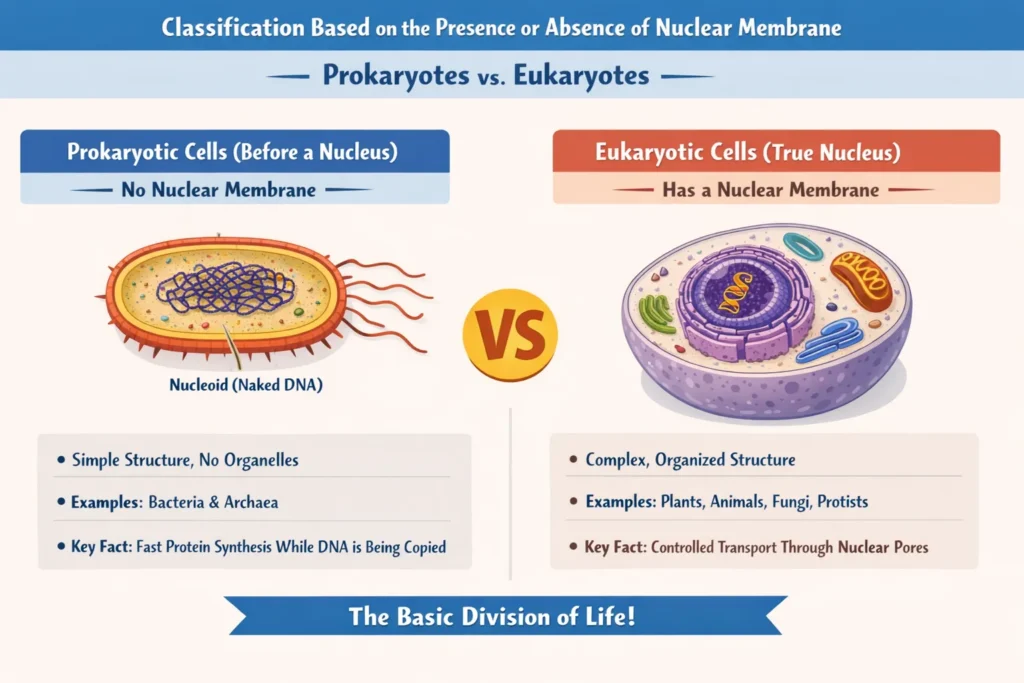
1. Prokaryotic Cells (Before a Nucleus)
In these cells, the nuclear membrane is completely absent.
- Genetic Material: The DNA is not enclosed; it lies naked in a region called the nucleoid.
- Structure: They are simple and lack membrane-bound organelles (like mitochondria or ER).
- Examples: All bacteria (like E. coli) and archaea.
- Key Fact: Because there is no barrier, the cell can start making proteins even while the DNA is still being copied.
2. Eukaryotic Cells (True Nucleus)
In these cells, a well-defined nuclear membrane (envelope) is present.
- Genetic Material: The DNA is safely locked away inside a double-layered membrane, separating it from the rest of the cell’s “machinery.”
- Structure: Highly organized with specialized compartments (organelles) for different tasks.
- Examples: Plants, animals, fungi, and protists (like amoebas).
- Key Fact: The nuclear membrane has pores that act like security checkpoints, strictly controlling what enters and exits the “command center.”
Comparison Summary
| Feature | Prokaryotic | Eukaryotic |
| Nuclear Membrane | Absent | Present |
| Nucleolus | Absent | Present |
| DNA Type | Circular & Naked | Linear & bound to proteins |
| Complexity | Simple (Primitive) | Advanced (Complex) |
How Does Everything Inside a Cell Move, and How Does It Affect Cell Function?
Everything inside a cell moves via a high-tech “highway system” called the cytoskeleton. It isn’t just a static skeleton; it is a dynamic network of protein fibers that acts as both a structural frame and a motorized transit track.
1. The “Tracks”: Three Types of Fibers
- Microtubules: Thick, hollow tubes (like train tracks) that provide the main routes for long-distance transport.
- Microfilaments (Actin): Thin, flexible threads that help the cell change shape and move things around the edges.
- Intermediate Filaments: Strong, rope-like cables that anchor organelles (like the nucleus) in place so they don’t just drift aimlessly.
2. The “Engines”: Motor Proteins
Organelles don’t move on their own; they are “carried” by specialized motor proteins (Kinesin and Dynein) that literally “walk” along the microtubule tracks.
- They use ATP (energy) as fuel for every step.
- They carry cargo like vesicles, mitochondria, or lysosomes to exactly where they are needed.
3. Cytoplasmic Streaming (Cyclosis)
In many cells (especially large plant cells), the entire jelly-like fluid (cytoplasm) flows in a circular motion. This “stirring” ensures that nutrients, enzymes, and genetic instructions are distributed evenly throughout the cell, rather than waiting for slow diffusion.
How Does This Affect Cell Function?
Movement is critical for the cell to stay alive and do its job:
- Supply & Demand: Mitochondria move to high-energy areas (like the base of a beating flagellum) to provide instant power.
- Waste Management: Lysosomes must move to fuse with waste-filled vesicles to digest them; if they can’t move, the cell becomes “clogged” with trash.
- Communication: Signals from the cell membrane must be transported to the Nucleus to trigger a response (like “start growing” or “repair this damage”).
Cell Division: Without the cytoskeleton moving chromosomes to opposite sides, a cell could never divide into two healthy daughter cells.