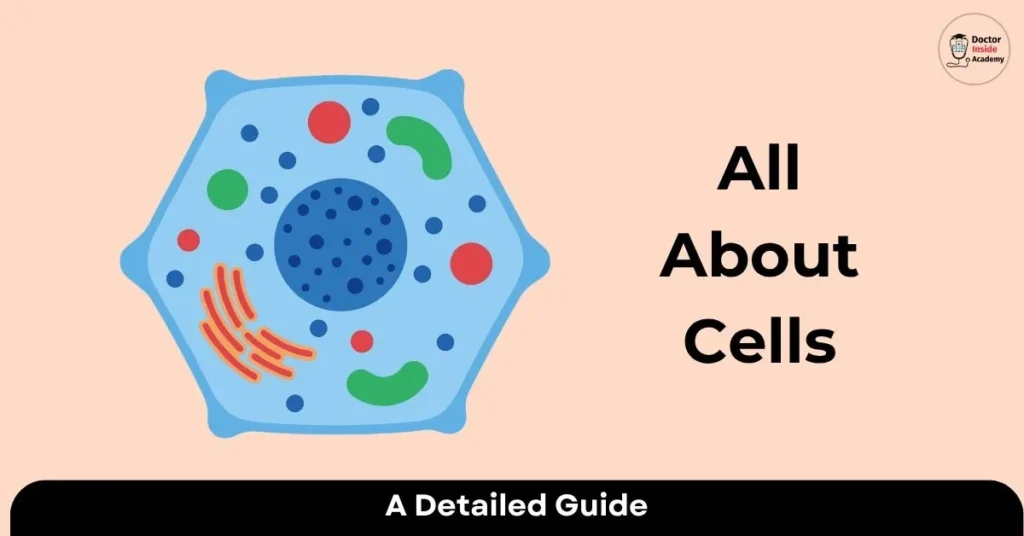
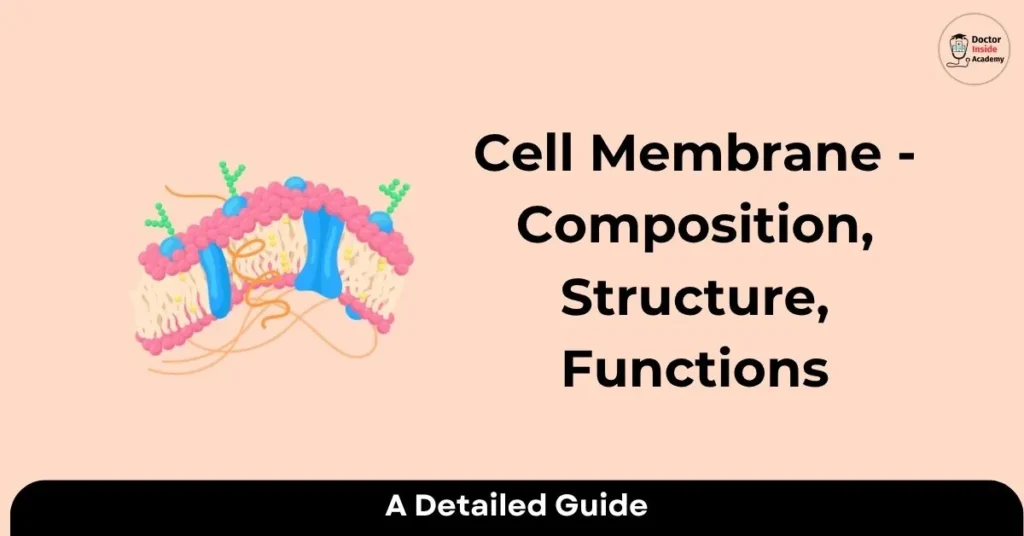
Cells are organized and protected by cell membranes. Every cell has an outer plasma membrane that controls the amount and type of chemicals that enter the cell. Eukaryotic cells, in contrast to prokaryotes, have internal membranes that enclose their organelles and regulate the exchange of vital cell constituents. The gatekeeping function of both types of membranes is facilitated by their unique structure.
Structure of Cell Membranes
- Glycerophospholipids, which are molecules formed of glycerol, a phosphate group, and two fatty acid chains, make up the majority of cellular membranes, including internal and plasma membranes.
- The three-carbon molecule glycerol supports these membrane lipids. Fatty acids are linked to the first and second carbons of a single glycerophospholipid, while the phosphate group is linked to the third carbon of the glycerol backbone.
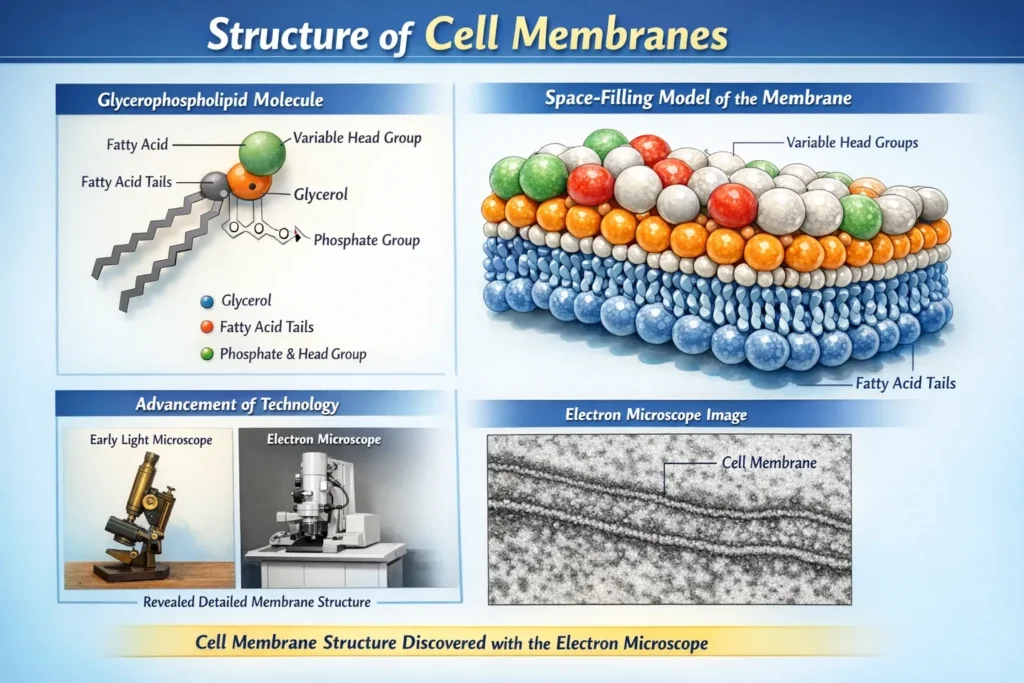
- The phosphate has variable head groups linked to it. These molecules’ cylindrical structure, which enables glycerophospholipids to line up side by side to create wide sheets, is revealed by space-filling models.
- Following the development of the electron microscope, the whole structure of the cell membrane was examined. The resolution of a light microscope is insufficient to comprehend the structure of the cell membrane.
- Therefore, the existence of a membrane-like structure throughout the cell could only be inferred from all the tests conducted before the invention of the electron microscope.
Types of Cell Membrane
The plasma membrane, sometimes referred to as the cell membrane, is more than just the “bag” that keeps a cell together. Although practically all cells fit into the basic Fluid Mosaic Model, the membrane can change into many “types” or specialized structures based on the demands of the cell.
Based on its location and the structures it encloses, the cell membrane in biology is frequently divided into these two types:
Cytoplasmic Membrane (Plasma Membrane)
The outermost layer of a cell’s protoplasm, or living substance, is called the cytoplasmic membrane, sometimes known as the plasma membrane. It controls the flow of materials into and out of the cell and divides the inside of the cell from the outside world.
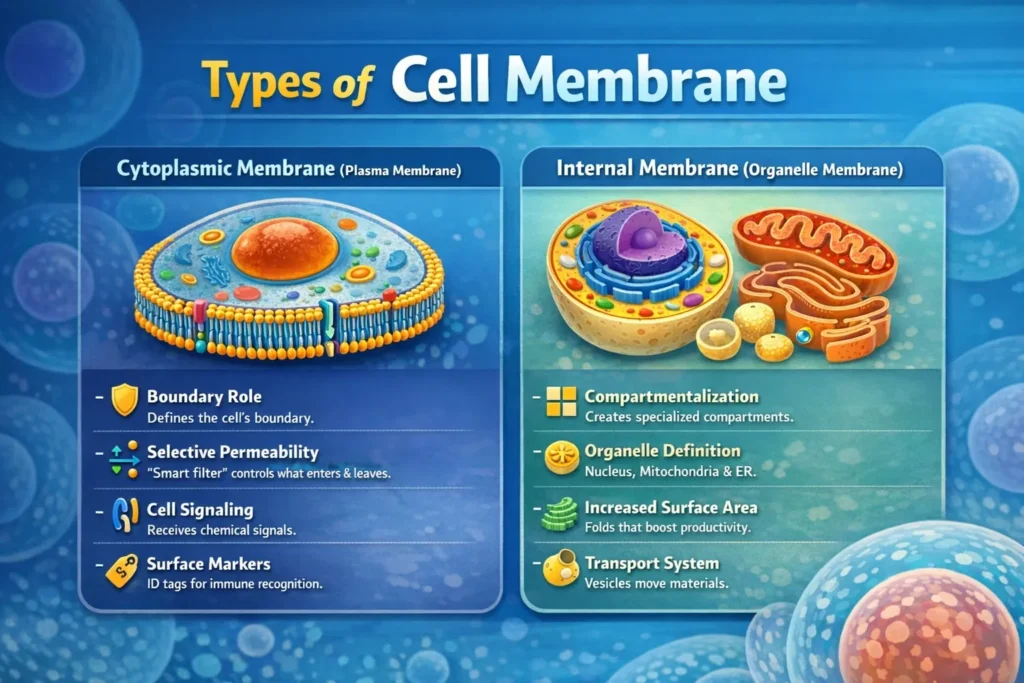
- The “Boundary” Role: It establishes the cell’s boundaries and shields the protoplasm from the outside world. The cell would lose its integrity and perish in the absence of this membrane.
- Selective Permeability: This wall functions as a “smart filter.” It employs both active and passive transport to drain out metabolic waste (like CO2) and let nutrients (like glucose) in.
- The body may interact with individual cells through cell signaling, which is made up of receptors (proteins) that receive chemical signals from hormones and other cells.
- Surface Markers: It contains “ID tags” (glycoproteins) that aid the immune system in differentiating between external invaders like bacteria and your own cells.
Internal Membrane (Organelle Membrane)
Eukaryotic cells include these membranes. They provide specialized compartments for distinct cellular activities by encircling and defining a variety of cellular organelles, including the nucleus, mitochondria, and vacuoles.
- Compartmentalization: Internal membranes produce distinct settings for various chemical processes, just like a house has separate rooms for cooking, sleeping, and working. In a lysosome, for instance, the acidic environment required for digestion is maintained apart from the rest of the cell.
- Definition of Organelles:
- The double-layered inner membrane that shields DNA is called the nuclear envelope. The location where ATP (energy) is produced is the mitochondrial membrane.
- The endoplasmic reticulum (ER) is a large internal membrane that produces lipids and proteins.
- Increased Surface Area: A lot of internal membranes are folded, such as the cristae in mitochondria. These folds provide more space for enzymes to work, significantly boosting the cell’s productivity.
- Transportation System: Internal membranes can pinch off to form vesicles, which act like tiny “delivery trucks” moving materials between organelles (e.g., from the ER to the Golgi body).
Composition of Cell Membrane
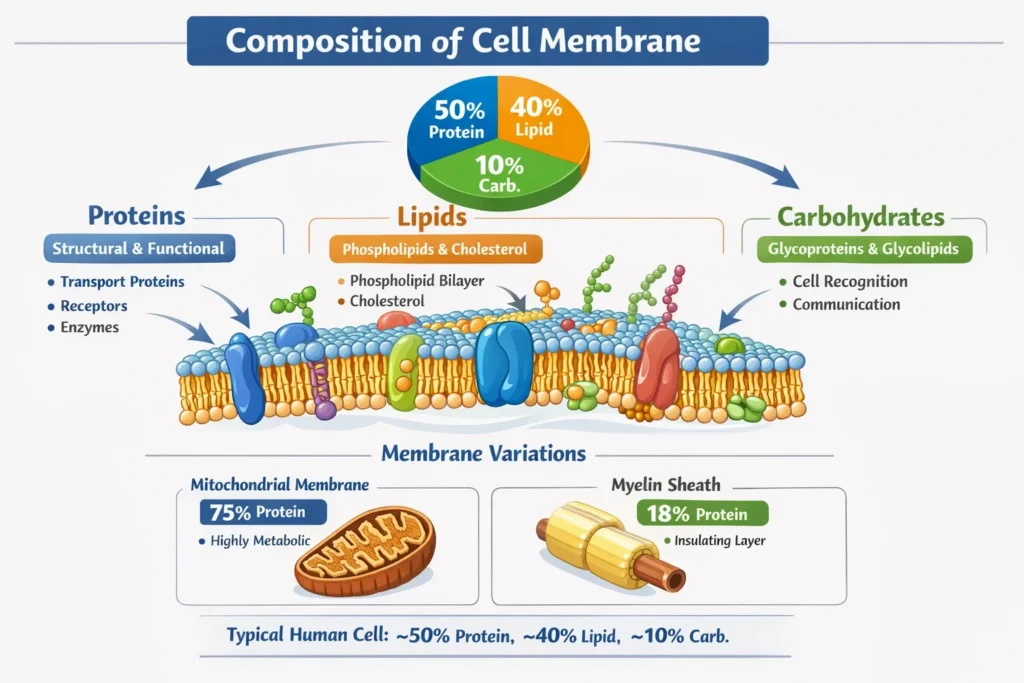
The cell membrane of an average human cell is made up of around 50% protein, 40% lipid, and 10% carbohydrates by mass. Depending on the function of the cell, these ratios can change dramatically. For instance, the protein content of metabolically active mitochondrial membranes can reach 75%, whereas that of insulating myelin sheaths can only reach 18%.
Structural Fabric, or Lipids:
- The membrane’s fundamental matrix is made up of lipids, which offer flexibility and a semipermeable barrier.
- The most prevalent element is phospholipids.
- With hydrophilic (water-loving) heads and hydrophobic (water-hating) tails that naturally form a bilayer, they are amphipathic.
- Phosphatidylcholine, phosphatidylethanolamine, and sphingomyelin are common varieties.
- In animal cells, cholesterol is nestled between the tails of phospholipids. It serves as a temperature buffer to preserve the fluidity and stability of the membrane.
- Glycolipids: Usually located on the outside, these lipids have sugar chains connected to them and help recognize cells.
The Functional Workers: Proteins
- Almost all particular membrane functions, including transport and signaling, are performed by proteins.
- Integral proteins are those that are permanently incorporated into the lipid bilayer.
- Many are “transmembrane proteins” that traverse the whole membrane and function as pumps or channels for molecules that are unable to pass through the lipids.
- Peripheral proteins are loosely attached to the exterior or interior surfaces.
- They frequently function as cytoskeleton structural attachments or enzymes.
The Identity Tags: Carbohydrates
- Only the membrane’s outer surface contains carbohydrates.
- Glycoproteins and Glycolipids: These are created when sugar chains bind to lipids or proteins.
- Glycocalyx: These molecules create a “sugar coating” that helps in cell-to-cell attachment and marks the cell as “self” to the immune system.
Additional Elements
- Water: Found in “bulk” water inside protein channels and in “organized” form around hydrophilic heads.
- Ions: A variety of ions, including sodium and calcium, are frequently adsorbed to the membrane’s charged surface.
Functions of the Cell Membrane
The cell membrane serves as the “communication hub” and “security team” of the cell. Its main tasks are as follows;
- Selective Permeability: This is its most well-known function. It controls what comes in and goes out, enabling nutrients like glucose to enter while pushing waste and poisons out.
- Protection and Barrier: It provides a physical boundary that keeps the cell’s delicate internal machinery safe from the chaotic environment outside.
- Cell Signaling: Surface-specific proteins function as antennae. They detect chemical cues (such as hormones) and instruct the cell on how to respond to bodily changes.
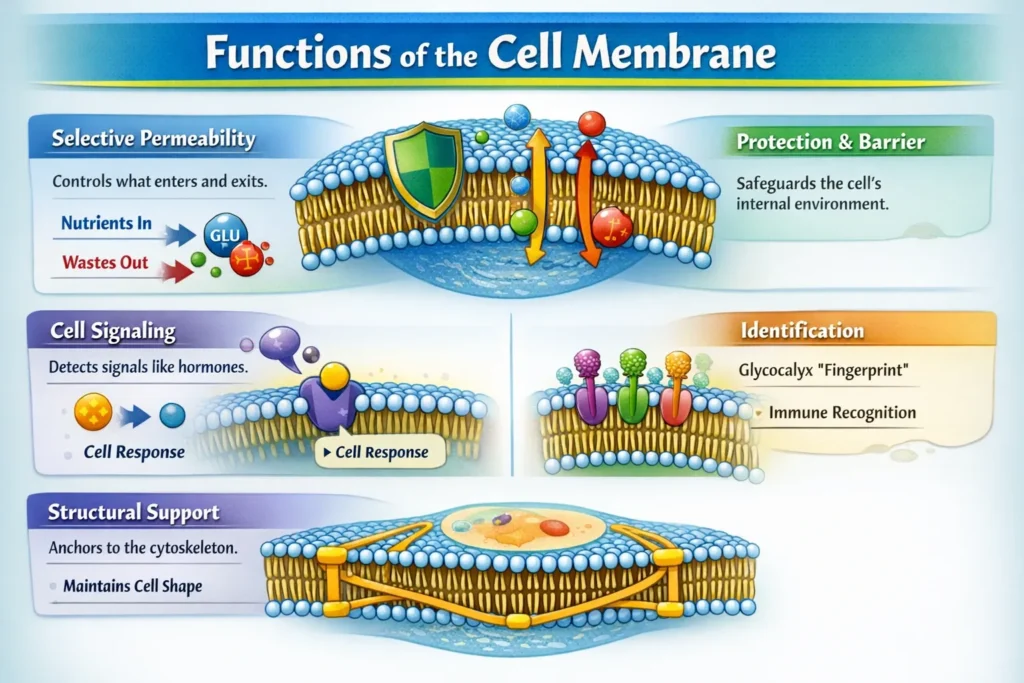
- Identification: The sugar coating (glycocalyx) on the outside acts as a fingerprint, helping the immune system distinguish your own healthy cells from “invaders” like bacteria.
- Structural Support: It attaches to the internal cytoskeleton, helping the cell maintain its shape and stay anchored to neighboring cells.
Types of Transport Across the Cell Membrane
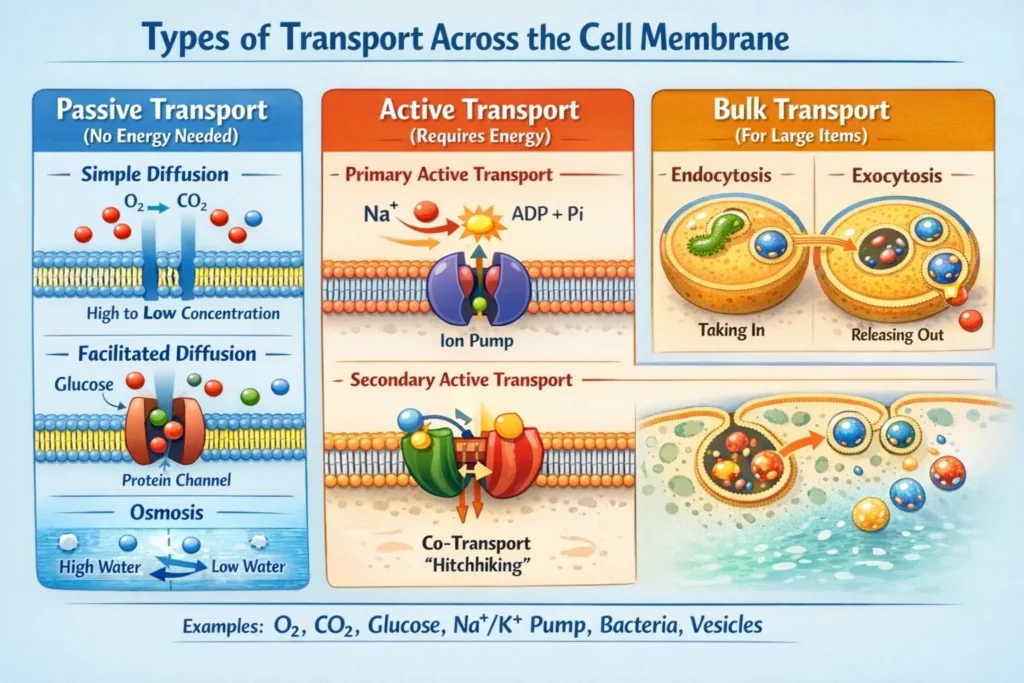
Depending on whether the cell needs to expend energy (ATP) to move items in and out of the cell, there are two primary methods.
Passive Transport (No Energy Needed)
- Like rolling a ball downhill, molecules naturally migrate from a high concentration to a low concentration (down the gradient).
- Simple Diffusion: Lipophilic or small molecules, such as $O_2$ and $CO_2$, easily pass across the phospholipid bilayer.
- Facilitated Diffusion: To pass through, larger or charged molecules (such as glucose or ions) require a “helper” protein channel or carrier.
- Osmosis: In particular, the flow of water across the membrane to equalize the amounts of sugar and salt.
Active Transport (Requires Energy)
Molecules are pumped against their concentration gradient (up the hill) by the cell using ATP.
- Primary Active Transport: Proteins that function as “pumps” (such as the sodium-potassium pump) transfer ions by directly using energy.
- Secondary Active Transport: A molecule “hitchhikes” on the energy produced by the motion of another molecule.
Bulk Transportation (For Large Items)
The cell employs vesicles, which are membrane-based bubbles, when it needs to transfer a lot of stuff at once.
- Endocytosis: The membrane encircles external material and draws it in, such as when a white blood cell consumes germs.
- Exocytosis: To expel trash or proteins (such as insulin), a vesicle fuses with the membrane.