A tissue is much more than an unorganized collection of cells. These cells must have a comparable morphology, or appearance, and a shared embryonic ancestor in order to be considered a real tissue. To carry out particular “duties” that a single cell just couldn’t manage on its own, they are arranged in a precise, organized manner.
Tissues represent a significant evolutionary turning point. Humans and other complex organisms depend on tissue-level structure to thrive, whereas lower living forms, such as multicellular protists, are merely collections of disorganized cells.
What is a Tissue?
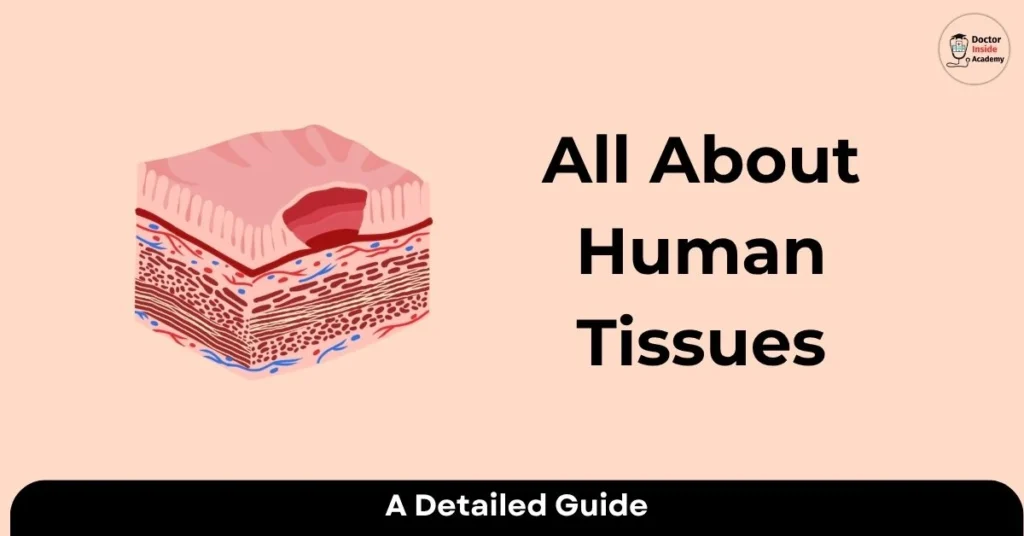
A collection of cells found together in the body is referred to as a tissue. A tissue’s cells have a common embryonic ancestor. A tissue’s cells share morphological characteristics and are grouped in an ordered arrangement that accomplishes the tissue’s duties, as may be seen under a microscope. From an evolutionary standpoint, more sophisticated creatures have tissues.
For instance, cells are not arranged into tissues in multicellular protists, which are ancient eukaryotes. The body is more efficient when it is organized at the tissue level because diverse internal structures and forms are better adapted to perform various tasks. Diverse tissues serve diverse purposes, which enables faster and more efficient performance of the varied tasks.
Main Benefit to Humans of having Tissue Level Organization
Tissues are the specialized building blocks of your body, which is a high-performance machine. A tissue is an ordered team of cells with a shared embryonic origin and corresponding structures that cooperate to carry out a certain function. It is more than merely a collection of cells.
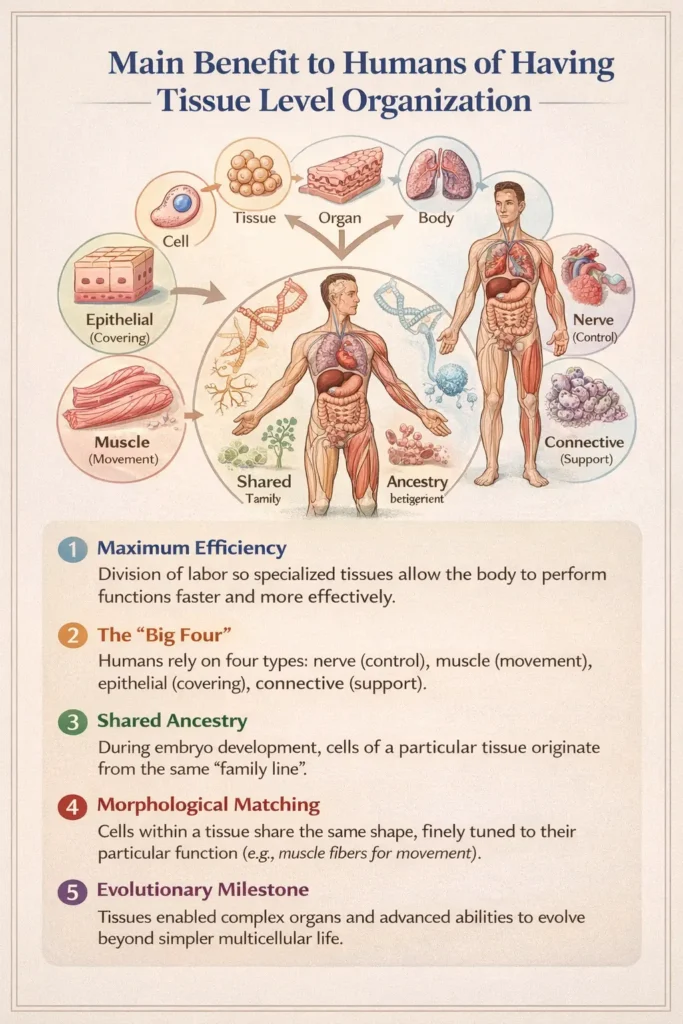
From an evolutionary perspective, the shift from single cells to complex tissues was revolutionary, enabling highly developed species like humans to flourish due to their better internal structure.
Here are 5 key points about tissue-level organization:
- Maximum Efficiency: The division of activities is the main advantage of tissues. The body can do complicated tasks more quickly and efficiently than a mass of disorganized cells because it has specialized groupings.
- The “Big Four”: Humans depend on four different types of tissue: nerve (control), muscle (movement), connective (support), and epithelial (covering).
- Shared Ancestry: During embryonic development, every cell in a certain tissue type originates from the same “family line,” guaranteeing that they are precisely matched for their function.
- Morphological Matching: Cells in a tissue have similar morphological traits, which means that their appearance and form are tailored to their function (e.g., long muscle fibers for stretching).
- Evolutionary Milestone: Tissues enable humans to grow complex organs, resulting in higher levels of physical and mental capabilities, whereas simple creatures such as multicellular protists lack this structure.
Four Types of Tissues
There are just four fundamental forms of tissue that make up every organ and structure in the human body. Each one is a specialized group of cells with a “job description” that is intended to maximize productivity.
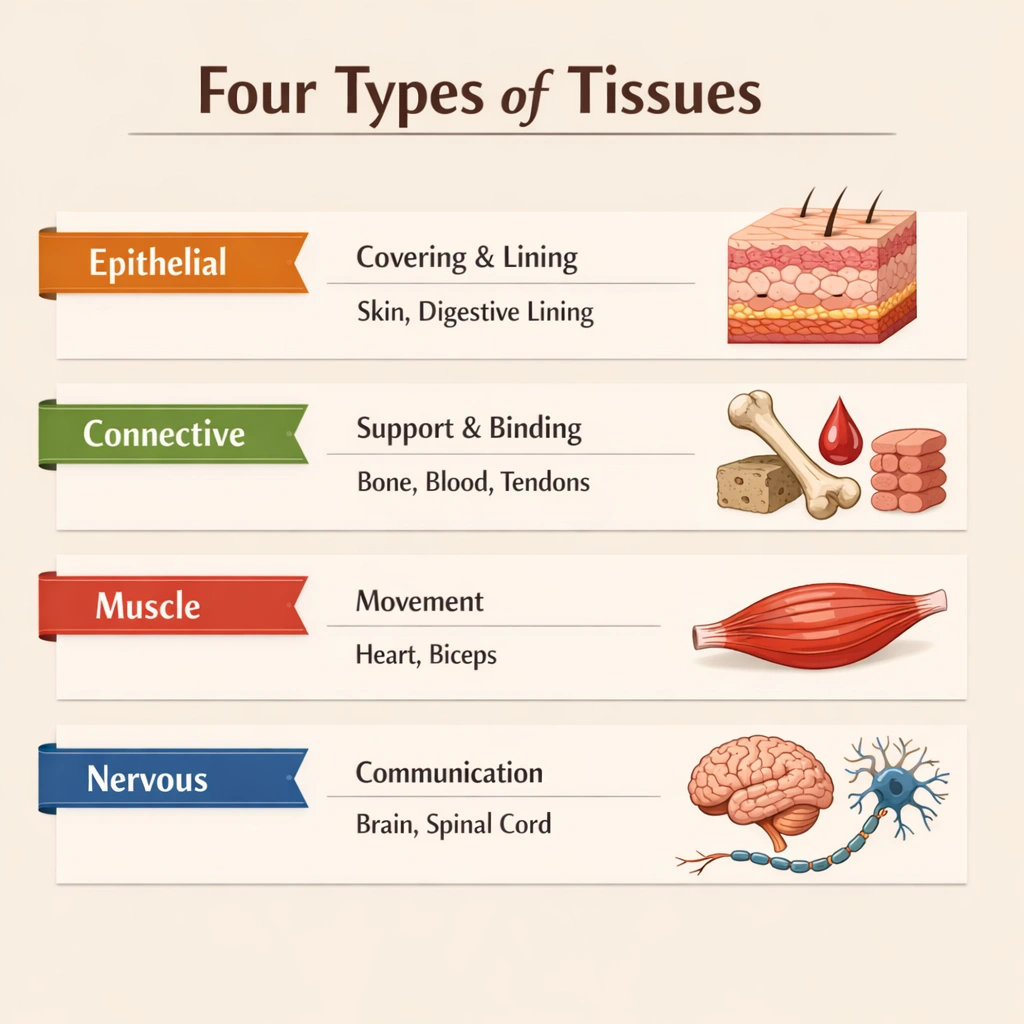
| Tissue Type | Primary Function | Example in Body |
| Epithelial | Covering & Lining | Skin, Digestive lining |
| Connective | Support & Binding | Bone, Blood, Tendons |
| Muscle | Movement | Heart, Biceps |
| Nervous | Communication | Brain, Spinal Cord |
Epithelial Tissue
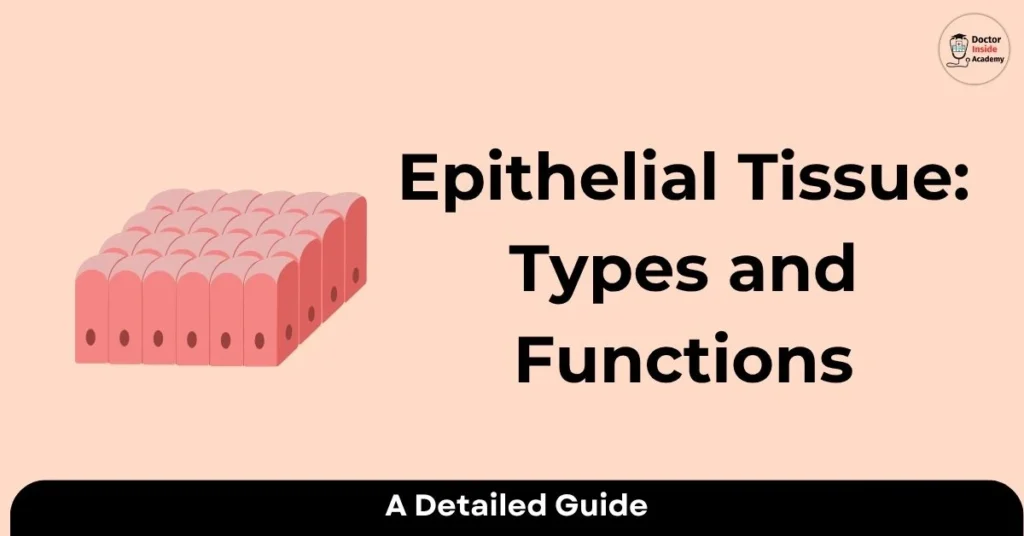
The body’s main “covering and lining” is epithelial tissue, which is made up of sheets of cells that are closely spaced from one another to provide a safe barrier.
Important Features of Epithelial Tissue
- Surface and Lining: It lines internal cavities such as the respiratory system, digestive tract, and blood vessels, and covers the skin on the exterior of the body.
- Polarity: These tissues have a “bottom” (basal surface) connected to a basement membrane and a “top” (apical surface) facing either an interior or external area.
- Avascular: Cells get nutrients by diffusion from underlying connective tissues; blood vessels are absent.
Principal Roles of Epithelial Tissue
- Protection: Serves as the skin’s first line of defense against germs, pollutants, and physical wear.
- Nutrients can enter the body through absorption, such as in the lining of the small intestine.
- Secretion: Creates glands that emit hormones, enzymes, or perspiration.
- Excretion: Helps the body eliminate waste (e.g., in the kidneys).
Types by Shape and Layering of Epithelial Tissue
Epithelial tissues are classified by the shape of the cells and the number of layers:
Shapes:
- Squamous: Flat and thin.
- Cuboidal: Cube-shaped.
- Columnar: Tall and narrow.
Layers:–
- Simple: A single layer (ideal for absorption/filtration).
- Stratified: Multiple layers (ideal for protection against abrasion).
Connective Tissue
As the “glue” that keeps everything together, connective tissue is the most prevalent and plentiful tissue in the human body. Connective tissue cells are widely distributed inside a large extracellular matrix (ECM), in contrast to epithelial tissue, where cells are closely packed.
Important Structural Factors of Connective Tissue
Three basic components comprise every connective tissue:
- Cells: Tissue-specific specialized cells (e.g., fibroblasts in most tissues, osteocytes in bone, chondrocytes in cartilage).
- Strength and flexibility are provided by protein fibers.
- The strongest and most prevalent fibers with a high tensile strength are collagen fibers.
- The protein elastin, which enables tissues to stretch and contract, is found in elastic fibers.
- Reticular fibers are thin, branching fibers that support soft organs like the spleen and liver.
- Ground Substance: A transparent, viscous, or even solid “filler” substance that envelops the fibers and cells.
Main Categories of Connective Tissue
Connective tissues are broadly classified based on the nature of their matrix and the arrangement of their fibers:
| Category | Sub-types | Function & Location |
| Connective Tissue Proper | Loose (Areolar), Dense Regular, Dense Irregular | Loose fills spaces between organs; Dense Regular forms tendons/ligaments; Dense Irregular is found in the skin’s dermis. |
| Specialized Connective Tissue | Cartilage, Bone, Adipose | Cartilage cushions joints; Bone provides rigid support; Adipose (fat) stores energy and insulates. |
| Fluid Connective Tissue | Blood, Lymph | Transports nutrients, gases, and immune cells throughout the body. |
Principal Roles of Connective Tissue
- Support and Binding: Secures organs and connects muscles to bones (tendons) or bones to bones (ligaments).
- Protection: Delicate inside organs like the heart and brain are protected by fibrous capsules and rigid bones.
- Thermal insulation and fuel storage are two functions of adipose tissue.
- Transportation: Waste materials, nutrients, and oxygen are distributed via fluid tissues like blood and lymph.
- Immune Defense: The body is shielded from infections by specialized cells found in the tissue, such as mast cells and macrophages.
Muscle Tissue
Because muscle tissue is excitable, that is, it contracts to move in response to stimulation, it is special. Actin and myosin, two contractile proteins, are found in muscle fibers, which are specialized cells.
- Skeletal muscle is connected to the bones. You actively regulate these muscles to walk, lift, or smile since they are voluntary. Under a microscope, they seem “striated” (striped).
- The walls of hollow internal organs, such as the stomach, intestines, and blood vessels, include smooth muscle. They transport chemicals throughout the body and are involuntary.
- Only the heart contains cardiac muscle. It has “intercalated discs” that assist cells in synchronizing their rhythm and is designed to pump blood constantly without fatigue.
Nervous Tissue
The body’s high-speed communication system is nervous tissue. It is intended to coordinate all bodily functions by receiving, processing, and transmitting electrochemical signals.
- The “stars” of the tissue are neurons. These are specialized cells that use electrical impulses to spread information.
- Glial cells, or neuroglia, are the “support crew.” Instead of sending messages, these cells maintain, feed, and shield the neurons.
- Location: The central nervous system, which is concentrated in the brain and spinal cord, and the peripheral nervous system, which is distributed throughout the body.
Final Words
The key to understanding how the human body works as a cohesive machine is an understanding of tissues. The efficiency and specialization required for complex life are provided by the tissue-level organization, even if a single cell is a miracle of biology.
These four tissue types constantly cooperate, from your nervous system’s quick messages to your epithelium’s protective barrier. They make sure that every organ, including your skin, heart, and lungs, has the proper “building materials” to function at its best.